

There is a major infrastructure gap in Nigeria’s gas distribution system that will require about $410 billion investment.
Also, the country will require $1.9 trillion to achieve its net-zero energy targets by 2060, according to the Nigerian Extractive Industries Transparency Initiative (NEITI).
The Agency made the submission while making presentation to the National Assembly members on Monday.
Speaking at a one-day dialogue organised by the Civil Society Legislative Advocacy Centre (CISLAC) and the Tax Justice Network Africa in Lagos, NEITI’s Director of Policy, Planning and Strategy, Dieter Bassi, warned that this funding gap could stall the country’s energy transition and leave billions in fossil fuel assets stranded.
The event brought together lawmakers, including members of the African Parliamentary Network on Illicit Financial Flows and Tax (APNIFFT), to seek strategies for phasing out fossil fuels, expanding renewable energy, and ensuring a just energy transition in Nigeria.
“Achieving net zero is not just about policy statements. It requires about $10 billion annually, yet we currently lack the financial access to support this transition,” Mr Bassi said.
In his speech Mr Bassi pointed at the structural challenges, including Nigeria’s reliance on fossil fuels, widespread gas flaring, and universal use of household generators.
“Every household has a generator,” he said, emphasising the significant carbon footprint this creates.
The NEITI has proposed a three-pronged agenda to support the transition: deploying data to guide policy, elevating the voices of host communities and vulnerable populations, and implementing reforms to ensure environmental safeguards and local beneficiation.
It disclosed that Nigeria needs $20 billion annually over the next decade to develop gas infrastructure, while Renaissance Capital suggests $17.3 billion to $29.3 billion may be necessary to support gas-transition initiatives.
NEITI, raised the concerns that without reforms addressing unremitted royalties, gas-flare penalties, and crude losses, the country may struggle to finance a just energy transition.
Mr Bassi called on legislators to enhance laws on renewable energy, local electricity distribution, and climate finance to attract private investment and ensure rural communities benefit.
He cited Nigeria’s potential in solar, hydropower, and tidal energy, pointing to Gabon’s revenue generation from forest-based carbon credits as a model.
He also warned that ongoing coal mining and charcoal exports undermine climate goals.
“We cannot achieve a just energy transition if we continue exploiting coal and exporting charcoal while claiming to reduce carbon emissions,” he said.
The NEITI director also spotlighted domestic battery manufacturing as a growth opportunity. Despite abundant lithium and rare minerals, Nigeria has only one local lithium battery producer, limiting industrialisation and job creation.
Mr Bassi raised warned over inefficiencies in the national grid, pointing that up to 50 megawatts daily from the Ibom Power Plant were previously rejected by the national grid, a situation recent reforms under the Electricity Act now allow communities to address.
He stressed that Nigeria continues to lose billions due to deforestation, missing potential revenue from carbon markets.
“Forests are not just environmental assets; they are economic assets,” he said.
Several lawmakers delivered goodwill messages during the dialogue.
Akin Rotimi, Chairman of the House Committee on Media and Public Affairs, reaffirmed the House’s commitment to supporting renewable energy expansion, fiscal coherence, and low-carbon development while protecting vulnerable communities dependent on traditional energy livelihoods.
Oluwole Oke, Chairman of the House Committee on Foreign Affairs, called for a strategic national approach to climate policy, citing coal mining in Kogi State as an example of environmental strain.
Olusola Fatoba, representing the House Committee Chair on NAFDAC, emphasised the need for a public health rationale for fossil fuel taxation.
Kalejaiye Adeboye, representing Ajeromi-Ifelodun federal constituency of Lagos, stressed broad stakeholder engagement and legislative oversight to ensure effective and inclusive climate financing.
Olamide Martins, Associate Director at Corporate Accountability and Public Participation Africa (CAPPA), warned that frontline communities are already suffering.
He cited the Ayetoro community in Ondo State, which has lost 90 per cent of its land to sea-level rise, forcing women to migrate and schools to relocate repeatedly.
He urged stronger community participation and oversight, recommending the establishment of a National Just Transition Commission, a National Climate Change Finance Framework, local manufacturing of solar and battery components, mandatory environmental, social, and governance standards, and expanded vocational training for green jobs.
The Executive Director of CISLAC, Auwal Musa (Rafsanjani), while speaking commended the lawmakers for prioritising the dialogue and stressed the importance of internal resource mobilisation as many development partners exit Nigeria.
“This dialogue underscores the urgency of aligning Nigeria’s energy transition policies, legislation, and climate finance mechanisms to prevent economic and environmental losses while creating opportunities for sustainable development,” he said
The Petroleum Industry Act (PIA) has emerged as the cornerstone of Nigeria’s upstream oil and gas sector transformation through strategic reforms, regulatory clarity, and increased investment inflows.
This was the highlight of the presentation delivered by the Commission Chief Executive of the Nigerian Upstream Petroleum Regulatory Commission (NUPRC), Engr. Gbenga Komolafe, at the 24th Nigerian Oil & Gas (NOG) Energy Week in Abuja.
Engr. Komolafe emphasized that the full implementation of the PIA, complemented by President Bola Tinubu’s 2024 Executive Orders on fiscal incentives, local content enhancement, and cost efficiency, has created a more attractive and transparent operating environment for investors.
The PIA, he stated, has laid the legislative and regulatory foundation, while the Executive Orders have accelerated progress by offering competitive incentives, strengthening domestic participation, and improving operational timelines. He added that these reforms collectively signal Nigeria’s readiness for investment and innovation in the upstream sector.
According to him, outcomes such as over 16 billion dollars in new investments and the rollout of Project One Million Barrels which targets increasing daily crude oil production to 2.5 million barrels by 2026 are already taking shape. He stressed that the reforms are not only about boosting production but also about ensuring energy security, resilience, and environmental sustainability.
Within the framework of the PIA, the Commission has driven key regulatory initiatives such as upstream digitization, infrastructure expansion, and the implementation of transparent licensing systems aimed at enhancing efficiency, reducing costs, and restoring investor confidence.
Engr. Komolafe revealed that central to Nigeria’s energy future is its gas driven energy transition. He reaffirmed the country’s commitment to end routine gas flaring by 2030 and reduce methane emissions by 60 percent by 2031. He also announced the designation of March 18th as Nigeria’s official Upstream Decarbonisation Day, underscoring NUPRC’s commitment to climate aligned development, carbon markets, and emissions tracking.
Komolafe further warned that the Commission will continue strict enforcement of the Nigerian Gas Flare Commercialisation Programme (NGFCP), noting that regulatory action has already been taken against defaulting producers.
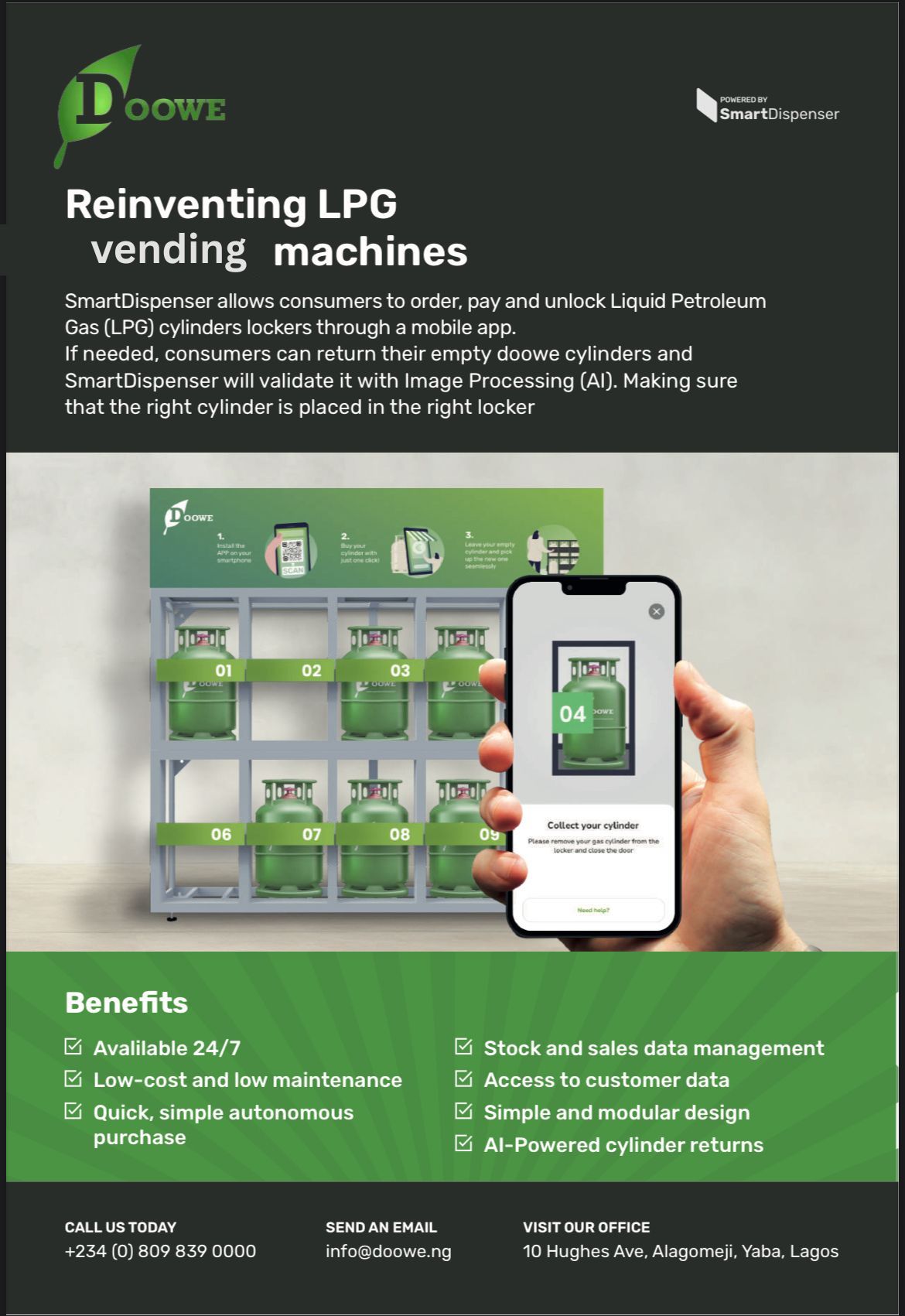
Doowe – Powering Innovation. Energizing Africa.
 DooweGas is on a mission to ignite the future of energy, and we want YOU to be a part of it! Our YouTube channel is the place for in-depth analysis, expert interviews, and the latest breakthroughs for professionals, investors, and policymakers in the energy sector.
Why Subscribe NOW?
Exclusive Content: Get cutting-edge insights you won’t find anywhere else.
Expert Analysis: Understand the “why” and “how” behind the biggest energy stories.
Community: Join a growing network of passionate energy professionals.
Be a Pioneer: Help us build the ultimate resource for African energy intelligence!
 Discover innovative LPG solutions
Learn how we’re powering homes & businesses sustainably
Connect directly with our team
 Don’t miss this chance to experience the future of energy with Doowe Gas!
 Limited-Time Exclusive Offer for Our Next 900 Subscribers!
To celebrate our journey to 1000, the next 900 people who subscribe to our channel will receive an exclusive, in-depth access to our research from DooweGas on “The Future of LPG in West Africa: Opportunities & Challenges,” absolutely FREE! This is invaluable for anyone in the energy space.
Join The DooweGas Mentorship Access By Doowe investment limited
Annual Access – DooweGas Mentorship WhatsApp Group
Unlock premium, year-round access to our exclusive community of serious gaspreneurs and experts.
What You Get:
Business insights from seasoned operators
Live Monthly Sessions: With industry leaders and DooweGas experts
Sales Strategies: Learn how to scale bulk sales, B2B, and cylinder tracking
Business Support: Ask questions, get feedback, and learn from real gaspreneurs
Group Referrals: Connect with reliable vendors, customers, and suppliers
Private Group Access: 24/7 interaction and guidance from mentors and alumni
How To Join And Take Advantage Of This Opportunity: Click: https://shorturl.at/vRq7w
Don’t miss out on this incredible opportunity to deepen your knowledge and get a valuable resource straight from Nigeria’s leading LPG retail company!
Join Our Gas Whatsapp Page
Send your number to : WhatsApp number : +2348134708634 to join and be a part of our energy journey.
Join the conversation on youtube. Get informed. Get empowered. Subscribe today!
 Click here to subscribe and claim your FREE access: https://www.youtube.com/@doowegas/
Source: orientalnewsng.com