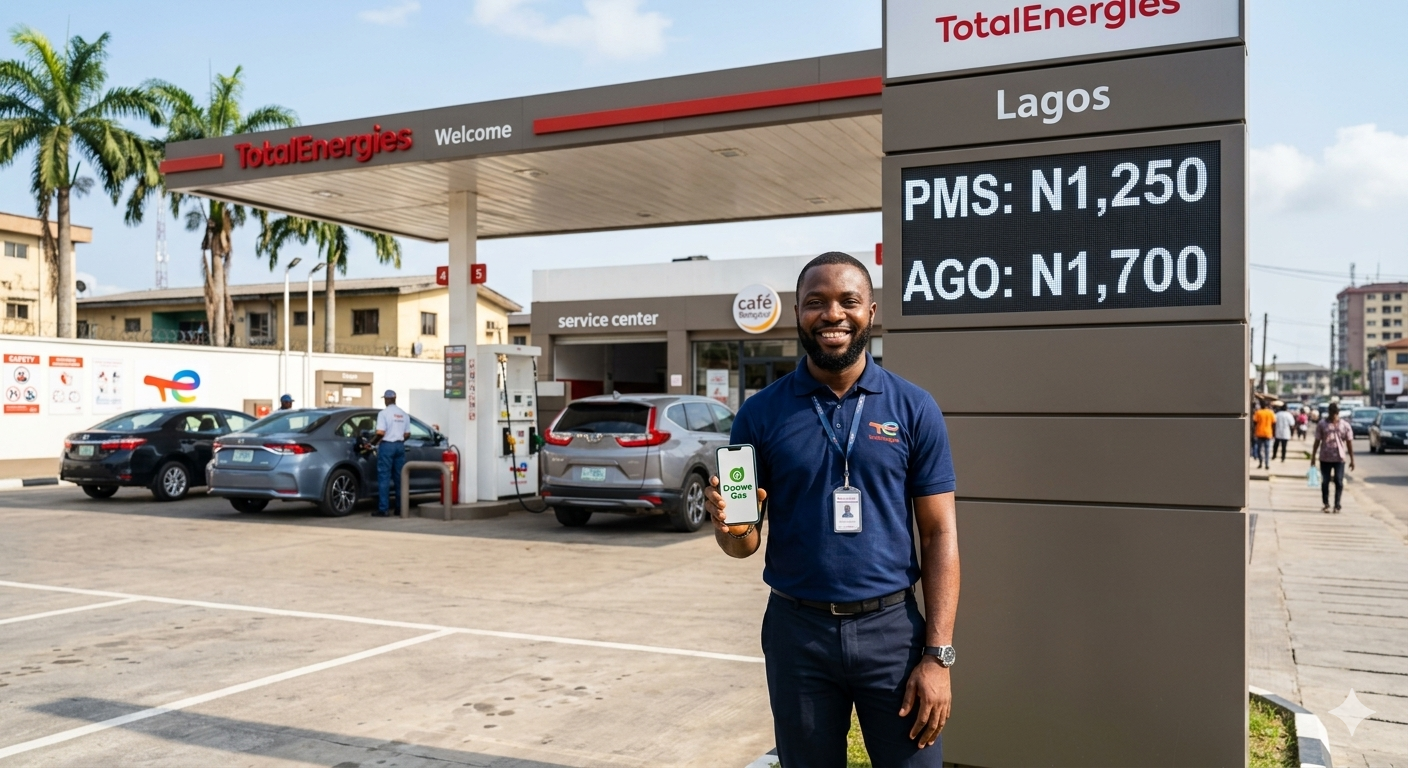

Fresh pressure is mounting on household energy costs as marketers on Monday warned that the price of Liquefied Petroleum Gas, popularly known as cooking gas, could rise further following a new price adjustment by the Dangote Petroleum Refinery and worsening global crude oil dynamics.
The Nigerian Association of Liquefied Petroleum Gas Marketers said retail prices have already climbed sharply to N1,000 per kilogramme, driven by higher ex-depot prices, surging logistics costs, and the ripple effects of rising crude oil prices.
This comes as the Dangote refinery increased its LPG ex-gantry price from N760 and N800 last week to N825 per kilogramme on Monday, a development seen by industry players as a key trigger for downstream price adjustments across the country.
Speaking in an interview on Monday, the association’s Publicity Secretary, Damilola Owolabi-Osinusi, confirmed that consumers should expect higher prices at retail outlets nationwide.
She said, “Yes, definitely. The price of cooking gas will rise. The prices have already increased to N1,000 per kg at retail stations. This is because of the cost of logistics. It has increased too, haulage and other loading costs, particularly haulage. Even the Dangote refinery has increased its price. It’s N825 from Dangote as of today.”
Her comments signal a widening gap between ex-depot and retail prices, underscoring the cumulative impact of supply chain costs on final consumer pricing.
Operators explained that, beyond the refinery price adjustment, rising transportation costs, fuelled by higher diesel prices and operational bottlenecks, are significantly compounding the situation.
The latest hike is closely linked to the sustained increase in global crude oil prices, which directly influences LPG pricing, as both products are derived from hydrocarbon processing.
As crude prices climb in the international market, the cost of propane and butane, the primary components of LPG, also rises, leading to higher import parity prices and upward pressure on domestic supply.
Nigeria, despite being a major gas producer, still relies partly on imports and market-linked pricing, making local LPG prices vulnerable to global energy shocks.
The anticipated increase is expected to further strain Nigerian households already grappling with rising food and energy costs, as LPG remains a critical cooking fuel for urban and semi-urban populations.
Over the past year, the Federal Government has promoted LPG adoption as part of its clean energy transition strategy, encouraging a shift away from firewood and kerosene. However, recurring price spikes have continued to threaten affordability and slow adoption rates.
Marketers warned that unless there is a significant drop in crude prices or targeted interventions to ease logistics and distribution costs, the upward trend may persist in the near term.
Stakeholders attribute the situation to a combination of factors, including foreign exchange volatility, high vessel and terminal charges, and infrastructure gaps in the domestic gas distribution network.
With the Dangote refinery now playing a more prominent role in domestic LPG supply, its pricing decisions are increasingly shaping market trends. Despite the concerns, marketers insist that the current adjustments are market-driven and necessary to sustain supply.
For now, consumers may have to brace for higher cooking gas prices, as the interplay between crude oil markets and local supply realities continues to dictate the cost of clean cooking energy in Africa’s largest economy.
Meanwhile, Ukraine’s President, Volodymyr Zelenskyy, said on Monday that Ukraine is exploring plans to import liquefied natural gas from Mozambique, as it grapples with energy shortages caused by years of Russian attacks on its production infrastructure.
Before the war, Ukraine met almost all of its gas needs through domestic production. However, Russian strikes have meant that Ukraine has lost about half of its gas output, Central Bank Governor Andriy Pyshnyi said late last year.
Last autumn, Russia intensified its attacks on Ukrainian gas production facilities, most of which are located in frontline regions in northeast and central Ukraine.
Speaking on the Telegram messaging app after meeting with Mozambique’s President, Daniel Chapo, Zelenskyy suggested that Kyiv could offer the southern African nation—which is battling an Islamist insurgency—support in countering its security challenges.
“Ukraine is interested in additional energy supplies. Mozambique is interested in Ukraine’s experience and technologies to strengthen its internal security and protect people from terror,” Zelenskyy said, without providing details of the volumes of gas that might be involved in any deal.
Mozambique is a major African gas producer, and in January, the country and TotalEnergies announced that they would relaunch an LNG project previously halted by the insurgency.
With the capacity to produce 13 million metric tonnes of LNG annually, the project is expected to make Mozambique a major gas exporter. Ukraine has not imported Russian gas since 2015.
In recent years, Kyiv has also been expanding its LNG supplies, establishing access to U.S. LNG from terminals in Poland and the Baltic countries.
Ukraine also imports U.S. LNG via the so-called Vertical Corridor of pipelines from Greece. European AGSI official energy data showed last week that Ukraine had begun storing gas in its underground facilities in preparation for the next heating season.
Energy minister Denys Shmyhal has said that Ukraine intends to start the 2026–2027 heating season with at least 13 billion cubic metres of gas in underground storage, roughly the same volume as in the previous season. Since the start of the war with Russia, Ukraine has not disclosed full details of its gas imports.
Move to unblock Nigeria’s oil sector hints at progress
In early March, Nigeria’s President Bola Tinubu resolved one of the oil industry’s thorniest issues when he split OPL 245, a deepwater oil block at the centre of decades of corruption allegations, into four licences to be operated by Shell and Italian major Eni.
To outsiders this may seem like just another deal in Africa’s largest producer. But OPL 245 — one of the country’s largest deepwater reserves — has not been explored as a result of a corruption trial and allegations involving Shell and Eni, and Nigerian politicians and officials.
The companies were acquitted in an Italian court in 2021. The resolution of the OPL 245 crisis is another signal that Nigeria’s besieged oil industry is once again showing signs of life, after years of mismanagement that had threatened its viability.
Signs of progress abound elsewhere. Oil production ticked up in 2024 and 2025, the two full years of Tinubu’s tenure. Nigeria produced an average of 1.5mn barrels per day last year, 8 per cent up on 2024.
It is an improvement on the gloomiest days under his predecessor, the late Muhammadu Buhari, when Nigeria’s oil production dipped below 1mn barrels per day. The industry had been buffeted by pipeline vandalism, theft, environmental pollution and distrust between host communities and the oil majors tapping their resources.
Tinubu’s government has focused on strengthening the security apparatus to clamp down on oil theft that many executives had long complained about. But for all the welcome changes, Nigeria’s oil output is still well short of its heyday two decades ago when it routinely pumped out more than 2mn barrels per day.
Bola Tinubu’s government has acted to clamp down on oil theft. Clementine Wallop, director for sub-Saharan Africa at consultancy Horizon Engage, credits improvements in the oil sector in recent years to regulatory changes, such as tax breaks introduced by the Tinubu administration, an overhaul of leadership at regulatory agencies and the state-owned Nigerian National Petroleum Company (NNPC), and Tinubu’s interest in oil as a vehicle for growth.
Those changes have brought about investment commitments from international oil majors that had been absent in the previous decade, she says, pointing to Shell’s billion-dollar investment in the Bonga offshore field. “The picture is much improved, but energy officials would be the first to say there’s a way to go yet,” Wallop says. “Production progress has been much slower than hoped”. This year’s more conservative oil price prediction “pegs”, used to set the national budget, “tell their own story”, she adds. “Regulatory change is promising, but implementation is slow thanks to the many layers of middlemen. Corruption continues to plague the sector.”
From Nigeria’s economic shock plan, age-gap politics, security and investmentand a game-changing oil refinery, The identity of the companies pumping out Nigeria’s oil is also changing. Where once an exclusively foreign group of oil majors drilled in the Niger Delta, Nigerian companies entered the fray in recent years as international rivals withdrew from the onshore industry because of dwindling returns, theft and clashes with local communities over environmental degradation.
A cohort of local groups has emerged to buy up the assets left behind by international firms, investing billions of dollars to move up the value chain. Some of those deals include: London- and Lagos-listed Seplat acquiring ExxonMobil’s assets in Nigeria; Shell, which drilled the country’s first successful well in 1956, selling its onshore business in a $1.3bn deal; and Eni selling its Nigerian arm to Oando, listed in Lagos and Johannesburg, in a deal worth $783mn.
The changing outlook onshore has not been without complications. Chappal Energies, which bought the local operation of Norway’s state-owned Equinor for $1.2bn, including its share in one of Nigeria’s largest deepwater fields, has been in financial turmoil for months that has seen the exit of its chief executive and board chair.
And while the process of approving Exxon’s asset transfer to Seplat began under Buhari, Tinubu’s government finally gave it the go-ahead after a drawn-out process. Noelle Okwedy, an independent energy analyst, says Tinubu’s revamp of oil has made Nigeria an attractive destination again for local and foreign investors.
This is crucial at a time of increased competition for investment in Africa, particularly in Angola, Ghana and Ivory Coast. Nigeria attracted about $5.3bn in upstream investment last year, compared with the same amount in the eight years to 2023 — highlighting the scale of the industry’s previous neglect.
“The reforms, especially around tax credits, were a big game changer,” Okwedy says. “The government is focusing on policy and fiscal incentives that will attract [investment] decisions from international oil companies who have competing interests.”
The success, or otherwise, of Nigeria’s oil industry is central to the cash-strapped government’s ability to raise revenues and reboot an economy showing some promise but still a laggard compared to its potential. Oil receipts contribute about 65 per cent to the government’s annual revenues and almost 90 per cent of the country’s foreign receipts, according to many estimates. Challenges remain.
In December, industry regulator the Nigerian Upstream Petroleum Regulatory Commission launched a licensing bid for 50 blocks that industry watchers say will be a test of progress. So will be investor interest in NNPC’s sales of its stake in some joint venture assets. Tinubu also signed an executive order last month that most monies received by NNPC be paid into the national account, after decades when it was allowed to collect revenues.
NNPC has been accused of mismanagement and corruption for decades, often denied by the company. Tinubu’s shake-up of the collection process could boost government finances but is already facing pushback from energy unions. “That’s a big bet,” says Wallop of Tinubu’s proposed reform to the NNPC. “If it works, the government says there is scope for the move to supercharge revenue. If it doesn’t, revenue constraints will persist and the economic turnaround could stall.
Why pay for Pro Mentorship Program?
If you haven’t yet joined the Doowe Gas Pro Mentorship Program, this is a great time to come on board and also share this opportunity with friends and colleagues who may benefit from it.
Our last session with the CFO of Lasaco Insurance Company was truly mind-blowing—packed with real industry insights, financial wisdom, and practical strategies you won’t easily find elsewhere.
Being part of this WhatsApp group gives you direct access to top industry leaders, exclusive mentorship sessions, insider knowledge on the LPG and energy business, networking opportunities, and continuous personal and professional growth—all for just ₦50,000 annually.
Don’t miss out on the chance to position yourself ahead in the industry.
👉 Upgrade to Premium Now to Attend
Post-Grid Industrialization – The Rise of the Private Gas Hub
https://punchng.com/dangote-price-hike-fuels-increase-in-cooking-gas-cost/
https://orientalnewsng.com/move-to-unblock-nigerias-oil-sector-hints-at-progress/