
Nigeria’s push to reposition natural gas as the backbone of its energy transition is gaining momentum, with production rising from 6.8 billion cubic feet per day in 2023 to 7.5 billion cubic feet per day in 2025.
The Coordinating Director of the Decade of Gas Secretariat, Mr Ed Ubong, disclosed this on Monday in Abuja, projecting that output could reach 12 billion cubic feet per day by 2030 if ongoing reforms and investments are sustained.
Ubong spoke at the Decade of Gas and World Bank Ministerial Roundtable and workshop, where government officials, regulators, investors, and development partners gathered to chart pathways for scaling gas development across Nigeria and Africa.
He attributed the recent growth in production to improved collaboration across the energy value chain. “We have seen gas production rise from about 6.8 billion cubic feet per day in 2023 to about 7.5 billion cubic feet per day in 2025.
This progress is largely driven by stronger collaboration among government institutions, regulators, investors, and industry players,” he said.
Setting an ambitious outlook, Ubong added, “Nigeria has reaffirmed its ambition to significantly scale up gas production, with a target of delivering up to 12 billion cubic feet of gas per day into the market by 2030.”
He stressed that achieving this goal would depend heavily on partnerships across borders and institutions.
“Africa’s energy future depends on our ability to work together across borders, institutions, and value chains to achieve shared prosperity,” he said.
Ubong explained that the ongoing Decade of Gas initiative, which runs from 2021 to 2030, was designed to unlock Nigeria’s vast gas reserves and reposition the sector as a driver of economic growth.
According to him, a dedicated secretariat was established in 2023 to coordinate implementation, focusing on stimulating demand, expanding infrastructure, ensuring competitive pricing, and building human capacity. “We are deliberately asking a critical question across the ecosystem: what support is required to move projects forward and unlock value for Nigeria?” he stated.
He disclosed that more than 215 gas demand projects are currently being tracked through a centralised database to improve planning and execution, adding that accountability mechanisms had also been strengthened to ensure delivery.
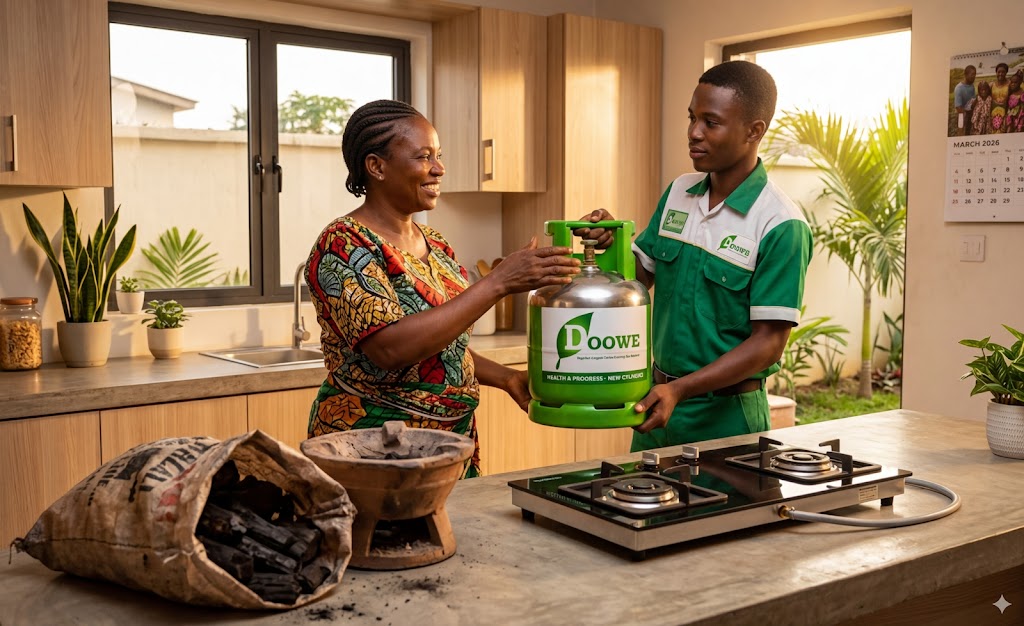
On key priorities, Ubong identified gas-to-power and the expansion of liquefied petroleum gas usage as central to Nigeria’s domestic energy strategy. “Gas-to-power remains critical for improving electricity supply, while increasing LPG adoption will help replace firewood and charcoal, improving public health and environmental sustainability,” he said.
He revealed that Nigeria plans to increase LPG consumption from 1.8 million tonnes per annum to 3 million tonnes by 2030, supported by the distribution of over five million gas cylinders nationwide.
Providing further insight, Ubong said several upstream operators had taken Final Investment Decisions on major gas projects, signalling growing investor confidence.
On infrastructure, he disclosed that the country has identified 16 priority pipeline projects requiring about $22bn in funding. “To deliver these projects, we need robust public-private partnerships and strong support from development partners, particularly the World Bank,” he said.
He added that Nigeria is positioning itself as a hub for a regional gas market, stressing that alignment on supply, demand, and infrastructure across African countries would be critical.
“We must develop pipeline systems that allow bidirectional flow to enhance flexibility and reliability across the region,” Ubong noted, citing projects such as the African Atlantic Gas Pipeline as key to connecting markets.
Also speaking at the event, the Chief Executive of the Nigerian Midstream and Downstream Petroleum Regulatory Authority, Aliyu Mohammed, emphasised the need for deeper regional collaboration to unlock Africa’s gas potential. “The first half of the Decade of Gas Initiative focused on identifying key enablers such as supply, demand, infrastructure, and pricing frameworks,” he said.
He added that the next phase would focus on execution and measurable outcomes. “The second half of the initiative must be driven by increased gas production, greater investment inflows, expanded pipeline networks, and the commissioning of new processing facilities,” Mohammed stated.
Highlighting Nigeria’s strategic export ambitions, he identified three major corridors for gas supply to regional and international markets. “These include the Africa Atlantic Gas Pipeline, the Trans-Sahara Gas Pipeline, and coastal LNG infrastructure along the Gulf of Guinea,” he said.
Mohammed stressed that unlocking these opportunities would require harmonised regulatory frameworks, credible demand data, and sustainable financing models. “We must establish structured mechanisms for cross-border gas exports, backed by firm supply agreements and expanded gas-to-power infrastructure,” he added.
He also called on the World Bank and other partners to support efforts to bridge Nigeria’s infrastructure gap. “We need to mobilise the estimated $22bn required to deliver critical gas infrastructure and fully unlock the sector’s potential,” he said.
Nigeria holds one of the largest gas reserves in Africa, estimated at over 200 trillion cubic feet, yet the resource remains underutilised due to infrastructure deficits, pricing challenges, and historically low domestic demand.
The Decade of Gas initiative was introduced by the Federal Government to reverse this trend by positioning gas as a transition fuel capable of driving industrialisation, improving electricity supply, and supporting cleaner energy use.
Despite recent gains, the country continues to grapple with power shortages, making gas-to-power projects a critical component of its energy strategy. Sustained investment, policy consistency, and regional cooperation will be key to translating Nigeria’s gas ambitions into tangible economic benefits.
Nigeria Pays 65% More for Gasoline as Dangote Battles Crude Import Costs
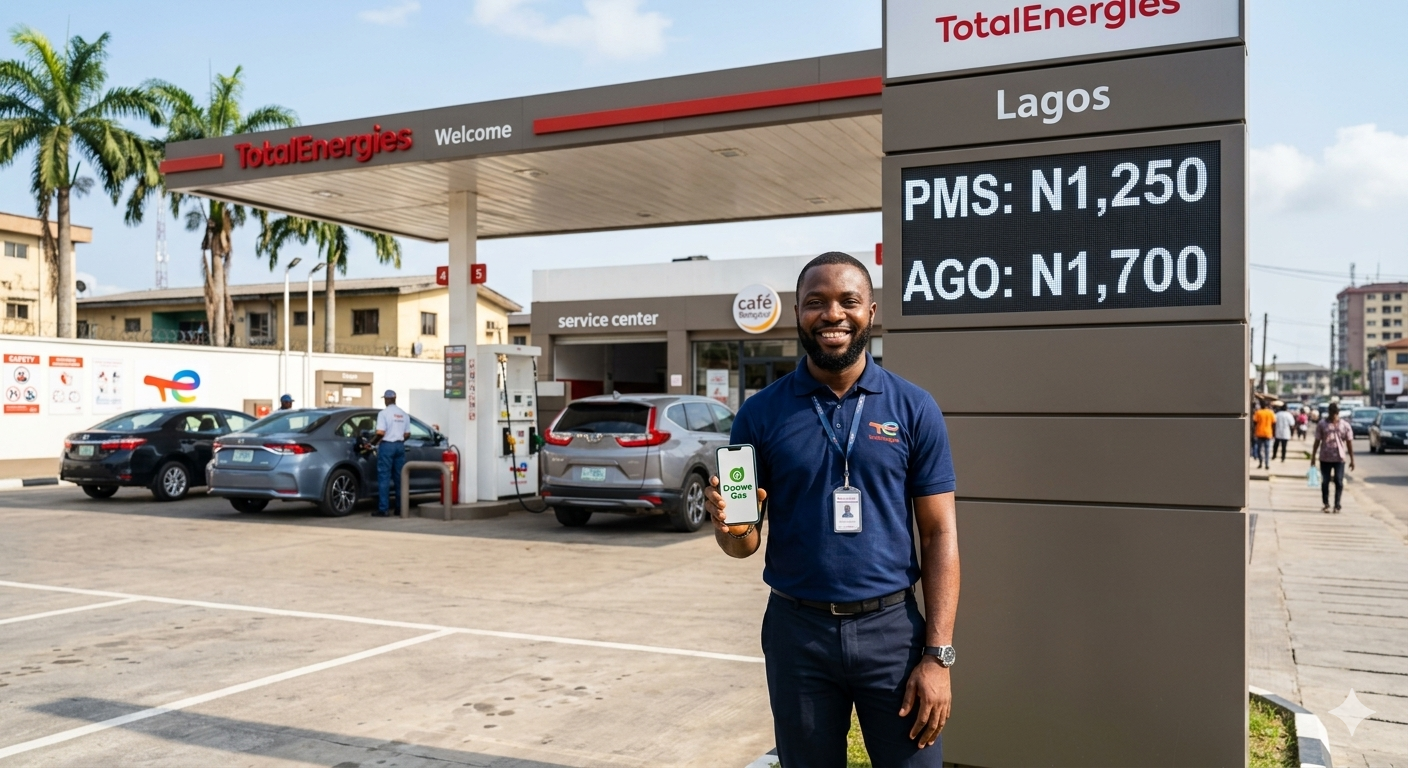
Despite the fact that Nigeria is now home to the biggest oil refinery in Africa, Nigeria’s gasoline prices have soared to a record high amid the war in the Middle East.
Dangote, the biggest refinery in Africa which began operations in 2024, has already started exporting fuel to regions other than West Africa. The refinery started up in January 2024 with the launch of diesel and naphtha production and began producing gasoline in September 2024.
In the early days of the war in the Middle East, the refinery said it would keep its “unwavering commitment to serving as a stabilising force amid recent shocks in the international oil market.”
However, the cost of crude for the refinery has escalated along with the surge in international crude oil prices, as Dangote relies on crude imports to process fuels.
“The high crude cost is compounded by the fact that Nigeria upstream producers have failed to supply crude oil to the refinery as required under the PIA, forcing us to source a substantial portion through international traders who charge an additional premium,” Dangote’s management said on March 5.
Therefore, Nigerians now pay 65% higher prices for gasoline, due to the refinery’s exposure to imports from the international markets.
Dangote’s CEO David Bird told local outlet Arise TV last week that the refinery currently receives only five local cargoes out of the 13-15 crude cargoes previously agreed.
“We try and maintain some stability within a commercially acceptable range… but all our cost inputs—from crude to freight and insurance—are impacted,” Bird told Arise.
Despite setbacks in gasoline production last year, the Dangote refinery processed record volumes of crude per day in January 2026.
Just before the war, Dangote supplied 62% of the country’s premium motor fuel, overtaking fuel importers for the first time ever.
But now the international supply crisis has exposed the reliance on foreign crudes and the price Dangote is paying for such crude on the international market.
Nigeria’s gas production surges to 7.5bcf/d, targets 12bcf/d by 2030
The Coordinating Director of the Decade of Gas Secretariat, Ed Ubong, has disclosed that Nigeria’s gas production rose from approximately 6.8 billion cubic feet per day in 2023 to 7.5 billion cubic feet per day in 2025.
Speaking at the Decade of Gas and World Bank Ministerial Roundtable and workshop in Abuja, Ed Ubong attributed the growth to strong collaboration among government institutions, regulators, investors, and industry players.
He stated that Nigeria has reaffirmed its ambition to significantly scale up gas production and deepen regional energy cooperation, with a target of delivering up to 12 billion cubic feet (bcf) of gas per day into the market by 2030.
He underscored the importance of collaboration among African nations, development partners, and private investors in unlocking the continent’s gas potential.
Ubong acknowledged the presence of African leaders and stakeholders, including the Ministers from across the continent, representatives of the World Bank, and Sponsors the Decade of Gas Secretariat.
He also recognised key regulators such as the Nigerian Midstream and Downstream Petroleum Regulatory Authority (NMDPRA) and the Nigerian Upstream Petroleum Regulatory Commission (NUPRC), the Chairman of PiCNG, and more than 60 project sponsors participating in the event.
According to him, these stakeholders are expected to play a pivotal role in advancing funding discussions, particularly with the World Bank, to accelerate gas infrastructure and development projects across Africa.
Ubong outlined the objectives of the roundtable, noting that the session would feature presentations on Africa’s gas landscape, including insights from global consulting firm McKinsey, followed by workshop discussions focused on collaboration between the World Bank and project sponsors.
The event also includes thematic sessions aimed at identifying practical strategies for efficient gas transportation across the continent to meet growing energy demands.
Tracing the origins of Nigeria’s current gas drive, Ubong recalled that the Federal Government declared 2021 to 2030 as the “Decade of Gas,” marking a strategic shift toward gas as a central pillar of the country’s energy mix.
He noted that President Bola Tinubu has consistently championed gas as a driver of economic growth under the vision of “Gas for Nigeria’s Prosperity,” while the Minister of State for Petroleum Resources (Gas) continues to engage stakeholders to strengthen the value chain.
He explained that a dedicated Secretariat was fully established in 2023 to coordinate implementation, focusing on unlocking Nigeria’s vast gas reserves, stimulating demand through credible off-takers, expanding infrastructure, ensuring competitive pricing, and building human capacity across the sector.
Ubong identified gas-to-power and the expansion of domestic liquefied petroleum gas (LPG) usage as two priority areas. He said the gas-to-power initiative is aimed at improving electricity supply, while increased LPG adoption seeks to replace firewood and charcoal, thereby improving public health and environmental sustainability.
He added that several upstream operators have taken Final Investment Decisions (FIDs) on major gas projects, with additional investments expected in the near future, signalling sustained momentum in the sector.
To enhance coordination, Ubong revealed that over 215 gas demand projects are currently tracked within NMDPRA centralised database, enabling more efficient planning and execution.
The Coordinator stressed that accountability mechanisms have also been strengthened, with stakeholders monitored on project delivery and progress.
“We continue to ask a critical questions across the ecosystem—what support is required to move projects forward and unlock value for Nigeria?” he said.
Ubong further explained that a structured governance framework has been adopted, bringing together government agencies, regulators, and industry leaders at the executive level, supported by technical workstreams to ensure consistent implementation.
Looking beyond Nigeria, he said the country is positioning itself as a catalyst for a regional gas ecosystem across West Africa. He stressed that achieving this vision would require alignment among countries on supply strategies, demand projections, and infrastructure development.
He highlighted the need for gas pipelines capable of bidirectional flow to enhance flexibility and reliability, noting that projects such as the African Atlantic Gas Pipeline would play a transformative role in connecting regional markets.
On infrastructure, Ubong disclosed that Nigeria has identified 16 critical pipeline projects requiring an estimated $22 billion in investment, emphasising the need for robust public-private partnerships to deliver them.
He also reiterated Nigeria’s commitment to environmental sustainability, noting that efforts are underway to curb gas flaring as production increases, in line with global environmental standards.
The power sector, he said, remains central to the gas agenda, requiring close coordination among key ministries, including Power and Finance, as well as industry operators to ensure reliable electricity supply.
On domestic consumption, Ubong said Nigeria plans to increase LPG usage from 1.8 million tonnes per annum to 3 million tonnes by 2030. As part of this strategy, over five million gas cylinders are expected to be distributed nationwide to encourage the transition to cleaner cooking energy.
He concluded that while significant progress has been made over the past three years, sustained collaboration remains critical to achieving Nigeria’s gas ambitions and broader energy security goals.
“This platform provides an opportunity to deepen partnerships, strengthen regional cooperation, and accelerate delivery. Africa’s energy future depends on our ability to work together across borders, institutions, and value chains to achieve shared prosperity,” Ubong said.
Join Our Pro Mentorship Program?
If you haven’t yet joined the Doowe Gas Pro Mentorship Program, this is a great time to come on board and also share this opportunity with friends and colleagues who may benefit from it.
Our last session with the CFO of Lasaco Insurance Company was truly mind-blowing—packed with real industry insights, financial wisdom, and practical strategies you won’t easily find elsewhere.
We have another session coming up on the 17th of April with the Co-founder of clowza.com. He has founded several businesses and sits on the board of several corporation. On this upcoming edition, he will be teaching us on cashflow and how to handle money for multiplication. You can’t afford to miss this life-changing event.
Why you must attend:
-
Learn how to keep your gas business profitable during inflation.
-
The secret to moving from “earning” to “multiplying.”
-
Exclusive B2B funding insights you won’t find on Google.
Being part of this WhatsApp group gives you direct access to top industry leaders, exclusive mentorship sessions, insider knowledge on the LPG and energy business, networking opportunities, and continuous personal and professional growth—all for just ₦50,000 annually.
Don’t miss out on the chance to position yourself ahead in the industry.
👉 Upgrade to Premium Now to Attend
https://thenationonlineng.net/nigerias-gas-production-surges-to-7-5bcf-d-targets-12bcf-d-by-2030/
https://punchng.com/govt-boosts-gas-production-eyes-12bcf-daily-output/