
About twenty four Nigerian States are now actively participating in the Compressed Natural Gas (CNG) programme as the country sustainably grows its capacity in energy transition.
The Executive Chairman and Chief Executive of the Presidential Initiative on Compressed Natural Gas and Electronic Vehicles, Ismaeel Ahmed, said that
in less than three years 24 states are active in the CNG conversion process.
Ahmed, said the Federal Government is targeting to establish 2,322 CNG stations nationwide by 2027 as part of efforts to deepen the adoption of alternative fuel vehicles and expand gas mobility infrastructure across the country.
The Executive Chairman made the disclosure during the Nigerian Oil and Gas Midstream and Downstream Summit organised recently by the Nigerian Content Development and Monitoring Board in Lagos.
Represented by an official of the agency, Olayinka Rufai, he said the government had made significant progress in expanding CNG infrastructure and vehicle conversion across the country within less than three years.
According to him, at inception, about one state had CNG available commercially, but the gas is now available in 24 of the 36 states of the country.
“We are looking at what goes on elsewhere. I think we can safely say that it is probably the fastest we have seen anywhere in the world, especially if you consider the conditions under which we are doing this, the economy, and everything,” he said.
Ahmed stated that over 100,000 vehicles had already been converted to run on CNG, noting that most of them were commercial vehicles due to the government’s focus on reducing transportation costs for ordinary Nigerians.
“Because of the palliative nature with which we started, the majority of those vehicles turned out to be commercial vehicles, because we intended to make an impact that touched the common man,” he said.
He explained that the initiative was designed to cushion the effect of fuel subsidy removal on transport costs. He disclosed that the initiative had also attracted over $1bn in investments into the CNG mobility sector.
“Also, we have been able to attract over a billion dollars of investment directly into this new industry/market called CNG for mobility,” he stated.
According to him, Nigeria currently has 72 active CNG refuelling stations and 175 more under development. “And of course, from next-to-zero refueling stations outside of Benin, at our inception, over 72 active CNG stations are in Nigeria today. And believe you me, that number continues to climb,” he said.
Nigeria also has 28 compression stations in operation and 65 under development to support virtual gas pipeline distribution.
Ahmed further disclosed that more than 350 conversion centres had been established nationwide, describing them as small Nigerian businesses driving the sector’s growth.
“We have 28 compression stations in operation today. There are 65 in development. We have 72 refueling stations, which we call daughter stations, but there are 175 in development. That means that whatever number you see today, we expect to triple it in less than 18 months, which will, of course, increase the capacity to supply, which we hope should drive greater interest and greater demand.
”We have done this primarily without much involvement of the major. So you can only imagine when they finally kick in, how that growth of retail supply infrastructure will explode. Also, we have over 350 conversion centres. In this audience, I need us to appreciate that these 350 are all small Nigerian businesses,” he stressed.
Alao, he said over 5,600 technicians had been trained and certified in CNG conversion technologies. He explained that the training became necessary because mechanics across the country needed to understand how to maintain converted vehicles.
“We have over 5,600 Nigerian technicians trained and certified in CNG, over 5,650. You can have 100 well-placed conversion centres, and you convert everything and give yourself 10.
“But what happens when the car is on the road and you have millions of mechanics who today don’t know anything about the CNG-converted vehicle? So we have placed a lot of emphasis on training and retraining technicians out in this space so that they are literate, familiar, and conversant with the different conversion technologies that exist,” he stressed.
Ahmed also revealed that the government had deployed 4,318 CNG tricycles, noting that 95 per cent of them were assembled locally. He added that Nigeria was witnessing increased local vehicle assembly activities, especially in tricycles and motorcycles. “It may interest you to know that the largest motorcycle assembly plant in Africa is here in Lagos,” he stated.
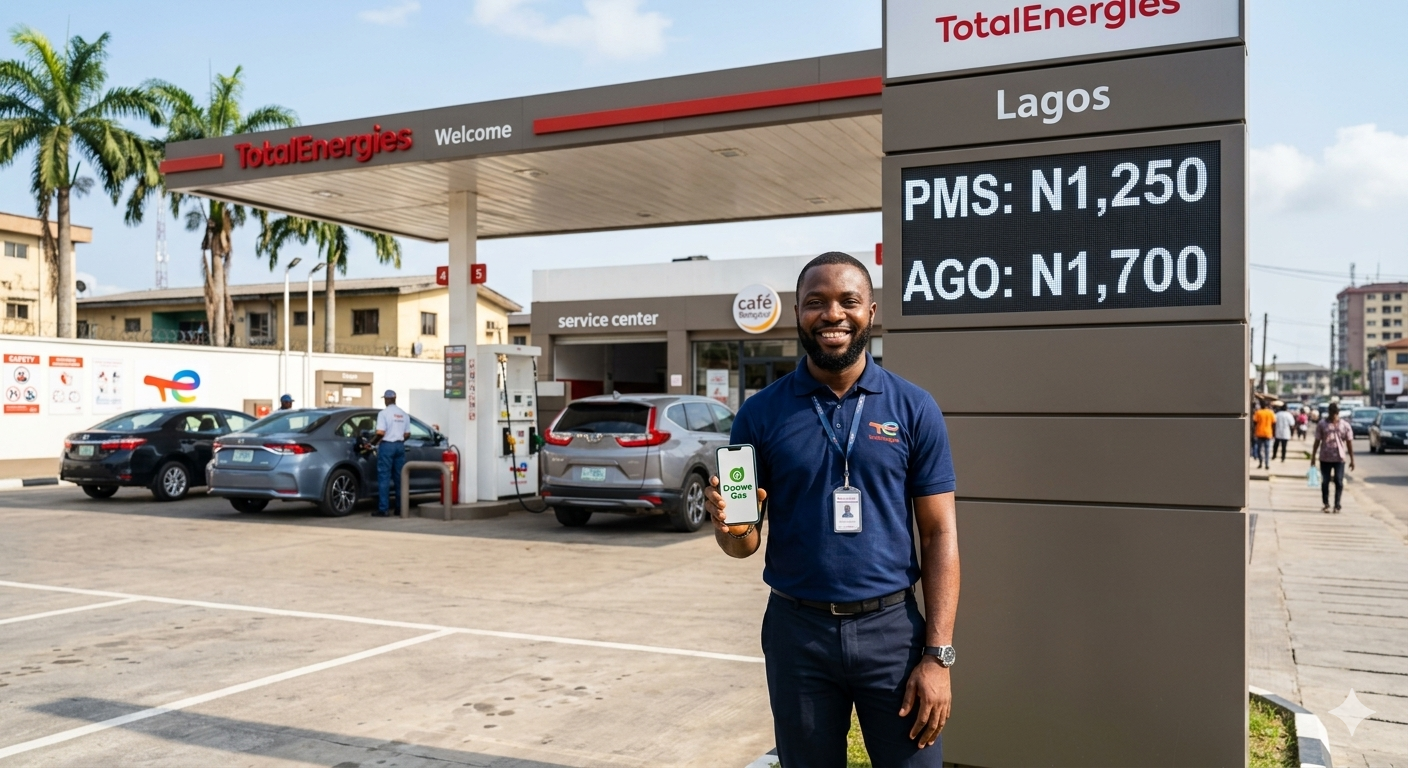
On the cost advantage of CNG, the CEO said the fuel remained significantly cheaper than petrol, saying, “The compelling argument is simple. CNG is N380 to N450 per standard cubic metre, which is the equivalent of one litre of petrol, which is N1,300 to N1,350 per litre. You do the maths. Where would you rather be?” he asked.
He added that the initiative was also scaling up electric vehicle deployment alongside CNG adoption. “We are scaling up CNG now, making it a reasonable, viable alternative to petrol and diesel. But we have also now picked up EV, and we are going to be deploying pilot EV projects across the nation and looking at recharging infrastructure,” he said.
He disclosed that the initiative’s 2027 targets include 2,322 CNG stations nationwide; 3,000 active conversion workshops; 1,000,000 total vehicle conversions; 75,000 direct jobs created and 300,000 indirect jobs.”
World Losing One Fifth Of Globally Traded Oil As Next Oil Shock Beckons Over Iran War
Experts have warned that if the Gulf exports is materially disrupted for an extended period, the world could temporarily lose close to one fifth of globally traded oil supply.
They also stated that even partial rerouting would likely fail to offset the disruption fully.
The consequences would extend well beyond energy markets as inflation could accelerate sharply, transportation and aviation systems would face mounting fuel pressure, and fuel-importing economies could face significant financial stress.
Altogether, the Liquified Natural Gas (LNG) shortages could simultaneously increase power reliability risks across Asia and Europe.
The broader issue is that the global energy system has become highly optimized for efficiency rather than resilience, according to Oil and Gas 360 report.
That structure works during stable periods. It becomes increasingly vulnerable during prolonged geopolitical disruptions.
Oil markets still appear to assume diplomacy or de-escalation will eventually normalize flows. That remains possible. But every additional month of disruption reduces inventories, increases costs, and narrows the system’s margin for error.
The world still produces substantial amounts of oil, but can enough of it continue moving reliably if the conflict persists.
That distinction may ultimately determine whether this becomes another volatile energy episode, or a much larger global supply crisis.
The longer the Iran war continues, the less this looks like a temporary geopolitical disruption and the more it resembles the early stages of a structural oil supply crisis.
For months, markets have focused on headlines surrounding ceasefires, diplomacy, and tanker traffic through the Strait of Hormuz. But beneath the volatility, the global oil system is steadily losing flexibility. Inventories are tightening, shipping risks remain elevated, and one of the world’s most important energy chokepoints continues operating under unstable conditions.
The issue is no longer whether disruption exists. It already does.
The question is how far the disruption spreads if the conflict continues.
The most immediate risk remains the Strait of Hormuz, through which roughly 20% of global oil supply normally flows. Even without a full closure, delays, rerouting, insurance costs, and intermittent restrictions are reducing effective supply and tightening markets globally.
The first and most likely scenario is prolonged “managed disruption,” where the Strait remains technically open but continues operating inefficiently and unpredictably. Under that environment, oil still moves, but at higher cost and lower reliability. Asian importers such as China, India, Japan, and South Korea would likely absorb the largest impact first given their dependence on Gulf crude exports.
In this scenario, prices remain structurally elevated while inventories continue declining. Shortages would likely emerge unevenly across refined products, particularly diesel, jet fuel, and petrochemical feedstocks.
A more severe scenario involves broader infrastructure disruption across Gulf production and export systems.
Several Gulf producers have already shifted exports to alternative routes, but those systems have limited capacity. Additional strikes targeting pipelines, export terminals, LNG facilities, or processing infrastructure could remove millions of barrels per day from global supply for extended periods.
The market’s vulnerability is amplified by years of underinvestment in upstream production, refining, and infrastructure redundancy. Commercial inventories are already tightening in several regions, while strategic reserves remain finite.
Under this scenario, oil prices could remain well above $120 to $150 per barrel for sustained periods, with downstream fuel shortages spreading more rapidly than crude supply losses themselves.
The most extreme scenario would involve a prolonged hard closure or near closure of Hormuz combined with broader regional escalation.
EU Warns Oil And Gas Prices To Remain Elevated Till End Of 2027
European Union (EU) officials have warned that oil and gas prices are expected to remain elevated through at least the end of 2027, with the fallout from the Iran war likely to keep pressure on inflation and economic growth.
Speaking after a meeting of eurozone finance Ministers in Cyprus on Friday, EU Economy Commissioner Valdis Dombrovskis said higher energy costs are now expected to drive inflation to 3.1 per cent this year and 2.4 per cent in 2027 well above the bloc’s earlier forecast of 1.9 per cent for this year.
The concern is no longer just fuel prices themselves. Once energy inflation gets loose, it tends to wander through the rest of the economy and make itself at home.
“We expect that this energy inflation will gradually also trickle down to different sectors of the economy,” Dombrovskis said.
European Central Bank President Christine Lagarde warned that even if the Middle East conflict ended immediately, the economic aftershocks would continue. Supply disruptions can end quickly on paper and still leave pricing distortions that linger for years.
Europe already learned that lesson after Russia’s invasion of Ukraine. Now it is getting a second reminder. The region spent the past two years stabilizing after one energy crisis, only to run headlong into another.
Europe was already grappling with some of the highest electricity prices among major economies. Before the Iran war, EU power prices were running at more than twice U.S. levels and roughly 50 per cent above China, according to the International Energy Agency (IEA).
That cost problem increasingly reaches far beyond household utility bills. Europe has already been losing ground in the AI and data center race because power is expensive, grid capacity is tight, and connection wait times can stretch for years. Cheap energy may not solve every problem. Expensive energy, however, has a remarkable ability to create new ones
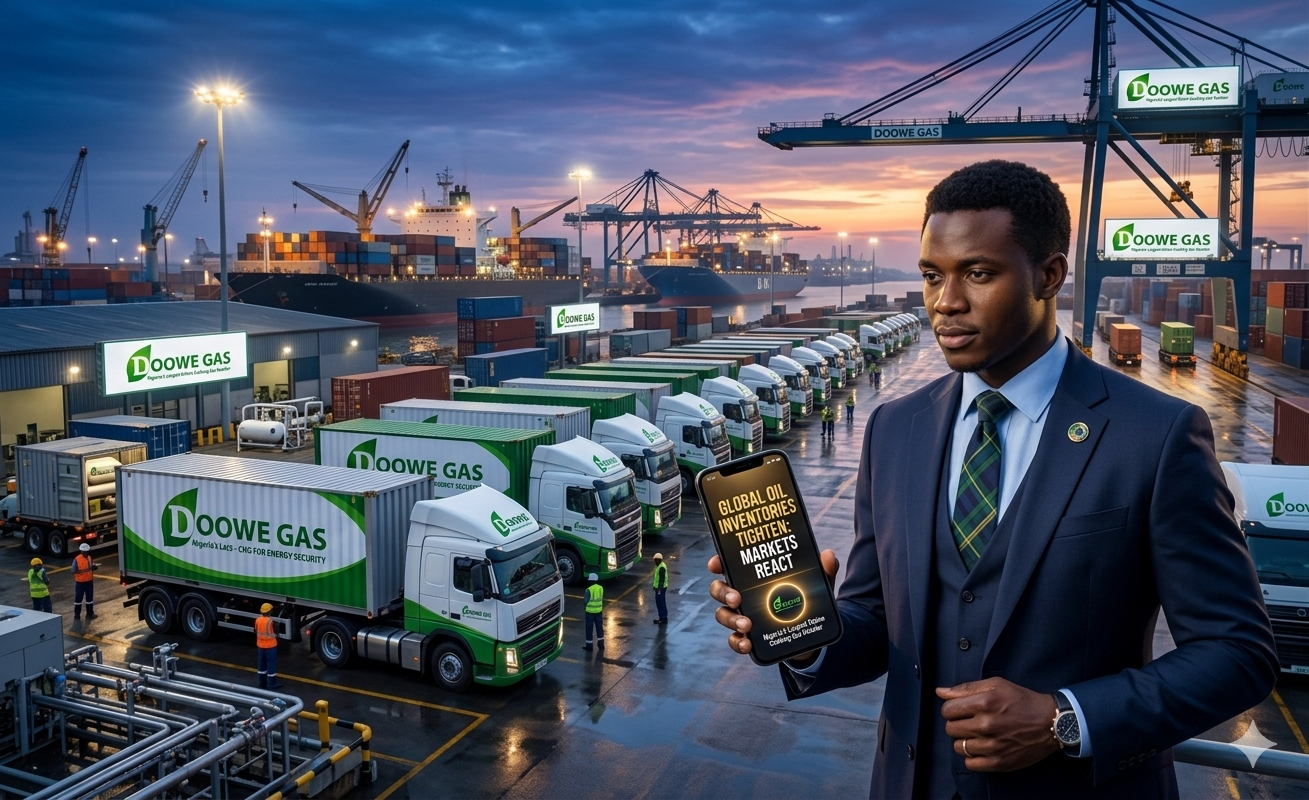
At Doowe Gas, we don’t just watch these trends; we help you navigate them. While the global supply of “Blue Gold” is tightening, Nigeria is positioning itself as the new safe haven for energy.
The energy market is moving at a geometric progression. If you are waiting for the evening news to tell you how to price your services, you are already losing money.
This isn’t just a chat group; it is a Wealth Hub. In the Doowe Business Premium Group, we pull back the curtain on the “Alpha” data. This is a special invite to you to be a part of something great.
Annual Access is just ₦50,000. In a world of fluctuating energy costs, this is the most profitable ₦50,000 you will ever spend.
 Join the DooweGas Premium Mentorship Group & Claim Your Future!
The Global LPG Shortage: Why the World is Desperate for Nigerian Gas
Source:
https://orientalnewsng.com/twenty-four-states-in-nigeria-actively-driving-cng-conversion-initiative/
https://orientalnewsng.com/eu-warns-oil-and-gas-prices-to-remain-elevated-till-end-of-2027/