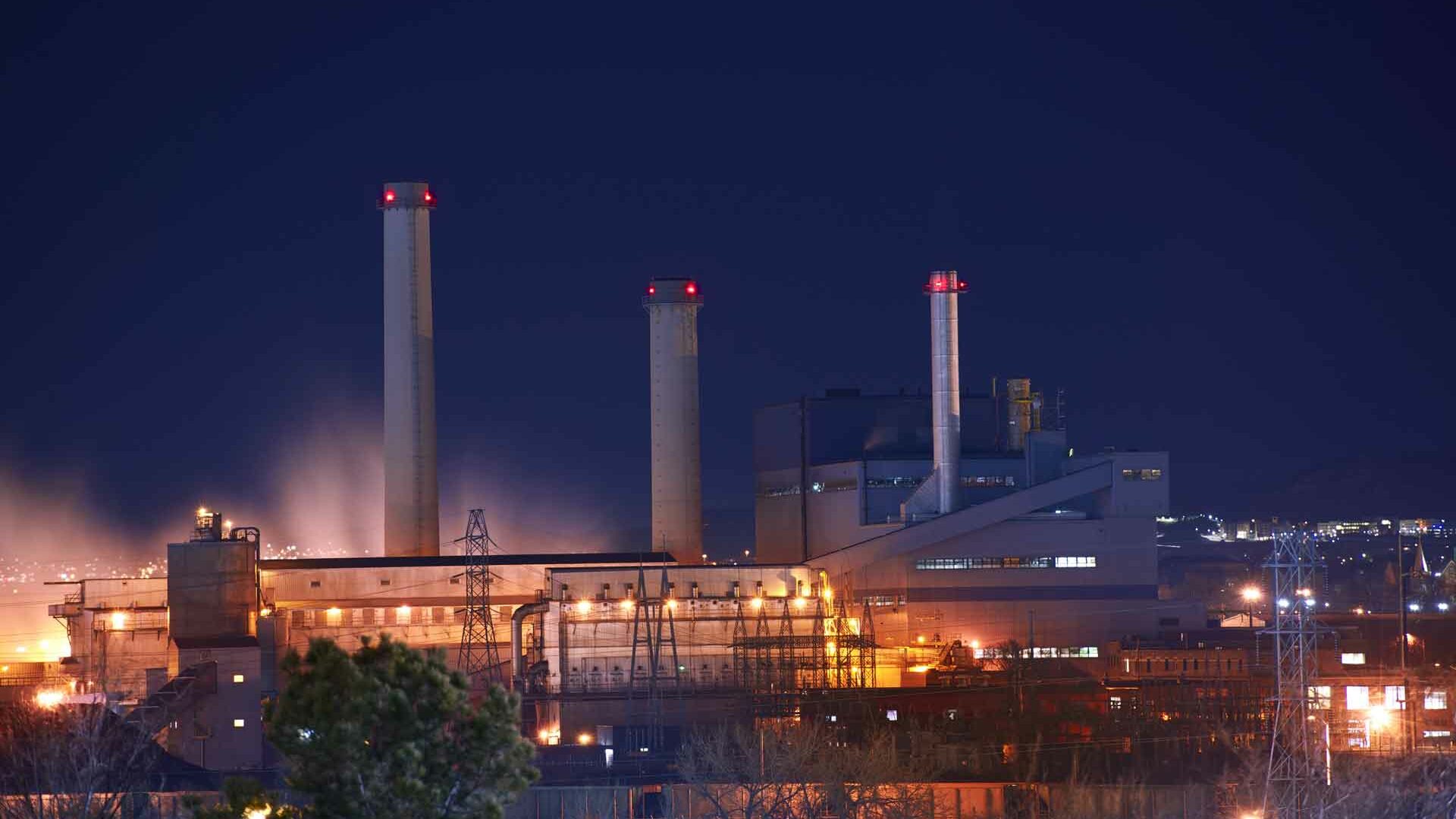


Natural gas prices soar 50% and Brent crude climbs 10% after QatarEnergy halts production amid Iran–US–Israel tensions and attacks near the Strait of Hormuz.
Natural gas prices surged by nearly 50% on Monday after QatarEnergy, one of the world’s largest exporters, suspended production following what it described as “military attacks” on its facilities amid the escalating Middle East crisis triggered by US-Israeli strikes on Iran.
According to BBC, the spike in oil and gas prices comes as Iran continues to carry out strikes across the region in retaliation for ongoing attacks by the US and Israel.
Brent crude, the global oil benchmark, jumped 10% to trade above $82 per barrel on Monday. The rise followed weekend attacks on at least three ships near the Strait of Hormuz.
Iran warned vessels against navigating the key southern waterway, through which roughly 20% of global oil and gas supplies pass.
In London, the FTSE 100 fell by 1%, with the parent company of British Airways among the hardest hit as Middle East airspace disruptions weighed on airline stocks.
Major banks including Barclays, Standard Chartered and HSBC also recorded share price declines amid fears that prolonged energy price increases could drive inflation higher and reduce the likelihood of further interest rate cuts by central banks.
Elsewhere in Europe, markets posted sharper losses. France’s CAC 40 dropped 1.8%, while Germany’s DAX extended earlier losses to 2.1% in early afternoon trading.
Gold, considered a safe-haven asset during periods of uncertainty, rose 2% to $5,388 per ounce.
QatarEnergy confirmed it had halted liquefied natural gas (LNG) production after Qatar’s Ministry of Defence reported that a drone launched from Iran targeted a facility in Ras Laffan Industrial City. Another drone was said to have targeted a water tank at a power plant in Mesaieed, south of Doha.
In neighbouring Saudi Arabia, Saudi Aramco temporarily shut down its major oil refinery at Ras Tanura on the coast following a drone strike.
Shipping activity at the entrance to the Strait of Hormuz has nearly ground to a halt, with analysts cautioning that a prolonged conflict could drive energy prices even higher.
The UK Maritime Trade Operations said two vessels were hit, while an “unknown projectile” reportedly “exploded in very close proximity” to a third ship.
After the initial spike, Brent crude retreated to $79 per barrel, while US-traded oil remained up about 7.6% at $72.20.
“The market isn’t panicking,” Saul Kavonic, head of energy research at MST Marquee, told the BBC. “There is more clarity that so far, oil transport and production infrastructure hasn’t been a primary target by any side,” he added.
“The market will be watching for signs that traffic through the Strait of Hormuz returns, which would see oil prices subside again.”
https://orientalnewsng.com/iran-us-israel-conflict-gas-soars-50-oil-climbs-10/
Analysts Says Refiners And LNG Market Face Mixed Outlook As Middle East Standoff Continues
Global energy analysts have warned of greater consequences of prolonged Middle East crisis especially on the energy market.
They noted that while integrated upstream majors often see margin expansion, petroleum refiners face a more mixed outlook depending on crude differentials and product spreads.
At the same time, Liquified Natural Gas (LNG) markets remain sensitive as any perceived threat to Gulf shipping routes introduces volatility into gas pricing, particularly in Asia, where cargo flows rely heavily on uninterrupted maritime transit.
Saudi Aramco’s reported effort to reroute crude shipments where possible, underscores how producers manage risk in real time.
Diversified export infrastructure and alternative pipelines reduce the odds of a complete supply halt.
The broader takeaway is they said straightforward as short-term geopolitical premiums can support prices and cash flow, but sustained moves require actual supply loss but if disruption remains limited, oil may give back part of its recent gains once tensions stabilize.
Reports say now, volatility favors balance-sheet strength and disciplined capital allocation as companies positioned to generate free cash flow at moderate price levels remain best insulated from swings driven by headlines rather than fundamentals.
Energy markets will continue to react quickly to events in the Gulf but long-term value, however, will still be determined by cost structure, capital discipline, and durable demand not temporary surges in geopolitical risk.
Meanwhile, oil prices have climbed as infrastructure attacks and rising tensions involving Iran renew concern over the security of supply routes near the Strait of Hormuz. The waterway remains one of the world’s most important energy corridors, and even the threat of disruption is enough to lift prices.
For investors, the key question is not whether tensions exist. It is whether they materially affect flows.
Several analysts suggest Iran’s ability to sustain a prolonged shutdown of oil transit appears limited.
A full closure would impose immediate economic costs across the region, including on countries whose exports depend on the same corridor and that reality tempers the probability of a long-duration supply shock.
Energy equities tend to respond quickly to geopolitical premiums and upstream producers benefit first, particularly those with low-cost barrels and minimal exposure to Middle East transit risk.
Shell Says Regulatory Enforcement To Help Nigeria Achieve Gas- Led Industrialisation
The Managing Director Shell Nigeria Gas (SNG) Ralph Gbobo, has said that
Nigeria can harness her gas resources for industrialisation if it achieves stable regulatory enforcement, fair pricing and infrastructure ownership models in the sector.
Speaking at the Energy Week of the Lagos Section of the Society of Petroleum Engineers (SPE), Ralph said investors need “a stable, fast and transparent implementation” of rules while a fair pricing regime could be achieved with “the right incentives to grow pipeline gas” which would also attract more investments. On infrastructure ownership models, he called for the completion of ongoing projects and ensuring the reliability of the Escravos-Lagos Pipeline System through “clear service standards.”
He said Government could also encourage investments in gas distribution through “demand aggregation.” “We need to create a friendly business environment and a clear plan (e.g., industrial parks or designated zones) so demand is clustered. That makes it easier for a distributor to get a license, invest, and build shared infrastructure that serves many industries—not just one or two.”
Ralph added: “Public–private partnership is crucial. Government backing helps planning and delivery. This model can also support industrial parks and other ways to aggregate demand.”
The Doowe Business Premium WhatsApp Group is where we pull back the curtain. While the general public is panicking over 50% price hikes, our members are learning how to hedge their risks and secure their supply chains.
The window to join the elite is closing. Don’t just watch the news. Profit from it.
💰 Coming March 19th: “From Idea to First Naira!”
Ever wondered how a CFO thinks?
On March 19th, 2026, we are hosting a masterclass that will change your business perspective. We are hosting Mr. Bukola Moradeyo, the CFO of Lasaco Assurance.
With 30 years of finance experience, Mr. Moradeyo will teach you how to validate a business idea with ZERO capital.
-
How to think like a corporate finance veteran.
-
Identifying “Zero-Cost” entry points in the gas market.
-
Financial discipline for early-stage startups.
Exclusive to Premium Members. Upgrade now so you don’t miss the link!
Post-Grid Industrialization – The Rise of the Private Gas Hub