
Nigeria’s average daily gas supply climbed to 4.684 billion standard cubic feet per day in November 2025, reflecting a stronger performance compared with October, according to fresh operational data released by the Nigerian Midstream and Downstream Petroleum Regulatory Authority.
The supply rose from the 3.94bscf/d average processing level recorded in October. A review of the latest fact sheet obtained on Sunday showed that the improvement was largely driven by higher plant utilisation across major processing hubs, alongside steady export volumes from the Nigeria LNG plant in Bonny.
It also disclosed that major processing plants improved their utilisation rates, domestic supply increased across strategic sectors, and the LPG market maintained a significantly larger surplus, despite prices remaining stubbornly high for consumers.
The report read, “As of November 2025, Nigeria’s major gas processing facilities recorded improved output and utilisation levels, with the Nigeria LNG Trains 1–6 processing 3.50 billion standard cubic feet per day at a utilisation rate of 73.70 per cent.”
The Nigeria LNG Trains 1–6 maintained a stable processing output of 3.5bscf/d in November, but utilisation improved slightly to 73.7 per cent compared with 71.68 per cent in October.
The strongest month-on-month jump came from the Soku Gas Plant, which ran at an impressive 96.84 per cent utilisation in November, a significant leap from its October rate when it operated below that threshold due to brief maintenance activities.
The Escravos Gas Plant, which averaged 0.68bscf/d at 75.57 per cent utilisation in October, reported 0.68bscf/d but a lower 62 per cent utilisation in November, reflecting a wider operating base but lower sustained throughput.
The authority added, “Gbaran-Ubie Gas Plant processed 1.250bscf per day, operating at 71.21 per cent utilisation, while the MPNU Bonny River Terminal recorded a throughput of 0.690bscf per day during the period.”
“Processing activities at the Escravos Gas Plant stood at 0.680bscf per day, representing a 62 per cent utilisation rate, whereas the Soku Gas Plant emerged as the top performer, processing 0.600bscf per day at 96.84 per cent utilisation.”
Domestic gas deliveries rose marginally in November across key strategic demand centres, reflecting a modest improvement over October levels, according to data from the NMDPRA.
Supply to the power sector increased slightly to 0.645bscf per day in November, compared with 0.641bscf per day recorded in October, reinforcing electricity generation as the largest single destination for domestically supplied gas.
Gas supply to the commercial segment recorded a stronger uptick, rising to 0.581bscf per day in November from 0.522bscf per day in the preceding month, indicating improved activity among bulk and non-power gas users.
Similarly, gas-based industries received 0.420bscf per day in November, up from 0.409bscf per day in October, pointing to a gradual recovery in industrial gas utilisation despite lingering infrastructure and pricing challenges.
“On the supply side, average daily gas deliveries to the Nigeria LNG plant amounted to 2,600bscf per day, while the domestic market received 2,084bscf per day, bringing total average daily gas supply to 4,684bscf per day in November.”
“A breakdown of domestic gas utilisation showed that the power sector remained the largest off-taker, consuming 0.645bscf per day, followed by the commercial segment at 0.581bscf per day and gas-based industries at 0.420bscf per day.”
“Export volumes remained strong during the month, with the Nigeria LNG Limited exporting an average of 101,555 cubic metres of LNG per day, equivalent to 45,966 metric tonnes, while natural gas exports through the West African Gas Pipeline averaged 0.121bscf per day.”
While the increases appear modest, the fact sheet attributed the improvement to stabilised upstream supply and restoration of capacities at power plants that had faced feedstock shortages in October.
Despite the improved allocations, power generation has not seen proportional gains due to transmission bottlenecks and poor liquidity in the electricity market.
Nigeria’s gas export performance remained robust in November, with the Nigeria LNG Limited sustaining strong shipment volumes during the period. Data from the NMDPRA showed that NLNG exported an average of 101,555 cubic metres of LNG per day, equivalent to about 45,966 metric tonnes.
In addition, gas exports through the West African Gas Pipeline remained steady at 121 million standard cubic feet per day, underscoring continued regional demand for Nigerian gas despite supply and infrastructure constraints at home.
The LPG market continued to record a supply surplus in November, despite a decline in volumes compared with the previous month. Industry data showed that average daily LPG supply dropped to 4,958 metric tonnes in November from 5,700 metric tonnes per day in October, while average daily consumption also declined to 3,992 metric tonnes, down from 4,410 metric tonnes recorded a month earlier.
Although supply moderated from October’s peak, it still exceeded consumption by nearly 1,000mt daily, underscoring Nigeria’s continued position as a net-surplus LPG market and reflecting improved availability of cooking gas nationwide.
However, this surplus failed to translate into lower prices for consumers. Retail LPG prices across the country remained elevated in November, ranging between N950 and N1,500 per kilogramme, unchanged from October levels.
Market operators attributed the persistent price pressure to high transportation costs, foreign exchange volatility, and the continued reliance on imported LPG components.
Despite the generally improved performance recorded in November compared with October, analysts cautioned that Nigeria’s gas sector remains constrained by long-standing structural challenges. These include recurring pipeline disruptions, limited investment in gas processing and transmission infrastructure, slow implementation of key midstream provisions of the Petroleum Industry Act, and foreign exchange instability affecting the LPG value chain.
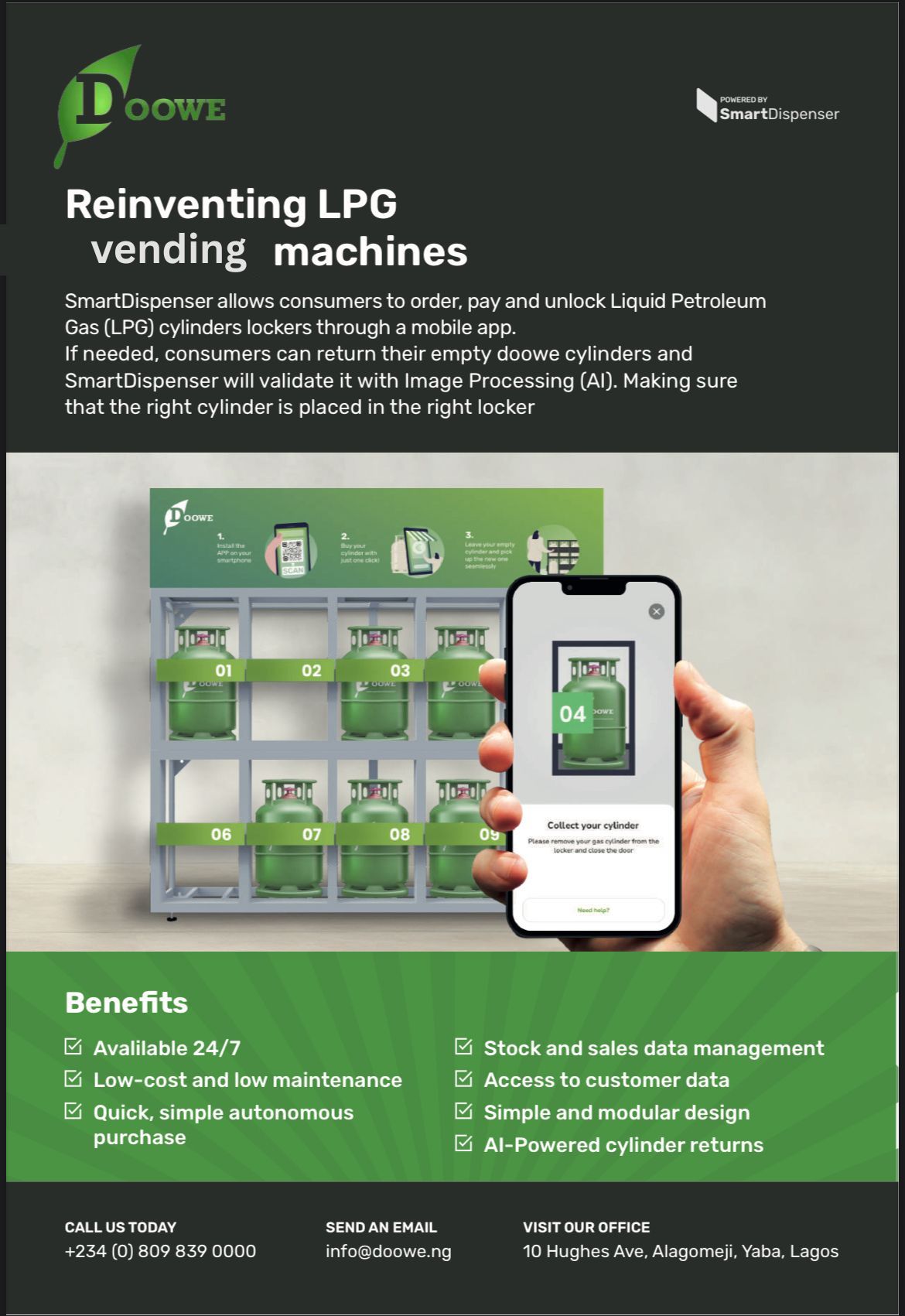
Doowe – Powering Innovation. Energizing Africa.
 DooweGas is on a mission to ignite the future of energy, and we want YOU to be a part of it! Our YouTube channel is the place for in-depth analysis, expert interviews, and the latest breakthroughs for professionals, investors, and policymakers in the energy sector.
Why Subscribe NOW?
Exclusive Content: Get cutting-edge insights you won’t find anywhere else.
Expert Analysis: Understand the “why” and “how” behind the biggest energy stories.
Community: Join a growing network of passionate energy professionals.
Be a Pioneer: Help us build the ultimate resource for African energy intelligence!
 Discover innovative LPG solutions
Learn how we’re powering homes & businesses sustainably
Connect directly with our team
 Don’t miss this chance to experience the future of energy with Doowe Gas!
 Limited-Time Exclusive Offer for Our Next 900 Subscribers!
To celebrate our journey to 1000, the next 900 people who subscribe to our channel will receive an exclusive, in-depth access to our research from DooweGas on “The Future of LPG in West Africa: Opportunities & Challenges,” absolutely FREE! This is invaluable for anyone in the energy space.
Join The DooweGas Mentorship Access
With the just-concluded COP30 — the global climate conference where world leaders, financial institutions, and policymakers set new directions for sustainability, carbon markets, and future business regulations — it has become important for individuals and organisations to understand what these decisions mean and how they will affect opportunities going forward.
Engr. Dr James Atiti will be sharing the full insights, recordings, and key materials inside the Doowe Mentorship Platform for anyone who wants to stay ahead and position themselves for the new wave of ESG and climate-related opportunities.
If you’re interested in accessing this information, kindly signify to be added. The annual subscription is ₦50,000.
This knowledge matters because COP30 decisions will influence:
New ESG and sustainability requirements
Access to funding, grants, and climate finance
Business compliance and competitive advantage
You Will Also Get:
Business insights from seasoned operators
Live Monthly Sessions: With industry leaders and DooweGas experts
Sales Strategies: Learn how to scale bulk sales, B2B, and cylinder tracking
Business Support: Ask questions, get feedback, and learn from real gaspreneurs
Group Referrals: Connect with reliable vendors, customers, and suppliers
Private Group Access: 24/7 interaction and guidance from mentors and alumni
How To Join And Take Advantage Of This Opportunity
Chat up this WhatsApp number : +353 89 951 6491 to join and be a part of this energy journey.
Join the conversation. Get informed. Get empowered. Subscribe today!
 Click here to subscribe and claim your FREE access: https://www.youtube.com/@doowegas/
Source: https://punchng.com/
 New Podcast Release!
Decarbonizing the Seas: LPG & LNG as Clean Maritime Fuels | Doowe Podcast ft. Temisan Omatseye
If you’re passionate about the future of sustainable maritime transport, this is a conversation you don’t want to miss. In our latest Doowe Podcast episode, maritime expert Temisan Omatseye breaks down how LPG and LNG are shaping the next era of cleaner, safer, and more efficient global shipping.
 From cutting-edge fuel technology to long-term decarbonization strategies, this episode is packed with insights for industry leaders, innovators, policymakers, and anyone curious about the future of the blue economy.
Watch now on YouTube:
Dive in, learn something new, and join the movement toward a cleaner maritime future. Let’s decarbonize the seas—together.