
The NNPC/Heirs Energies OML 17 Joint Venture has taken bold steps to invigorate Nigeria’s gas commercialisation drive by signing in five key gas offtakers that will turn flared gas into economic use.
The partners in Lagos on Tuesday endorsed a symbolic Gas Flare Commercialisation Agreements under the Nigerian Gas Flare Commercialisation Programme (NGFCP) and approved Non-NGFCP frameworks.
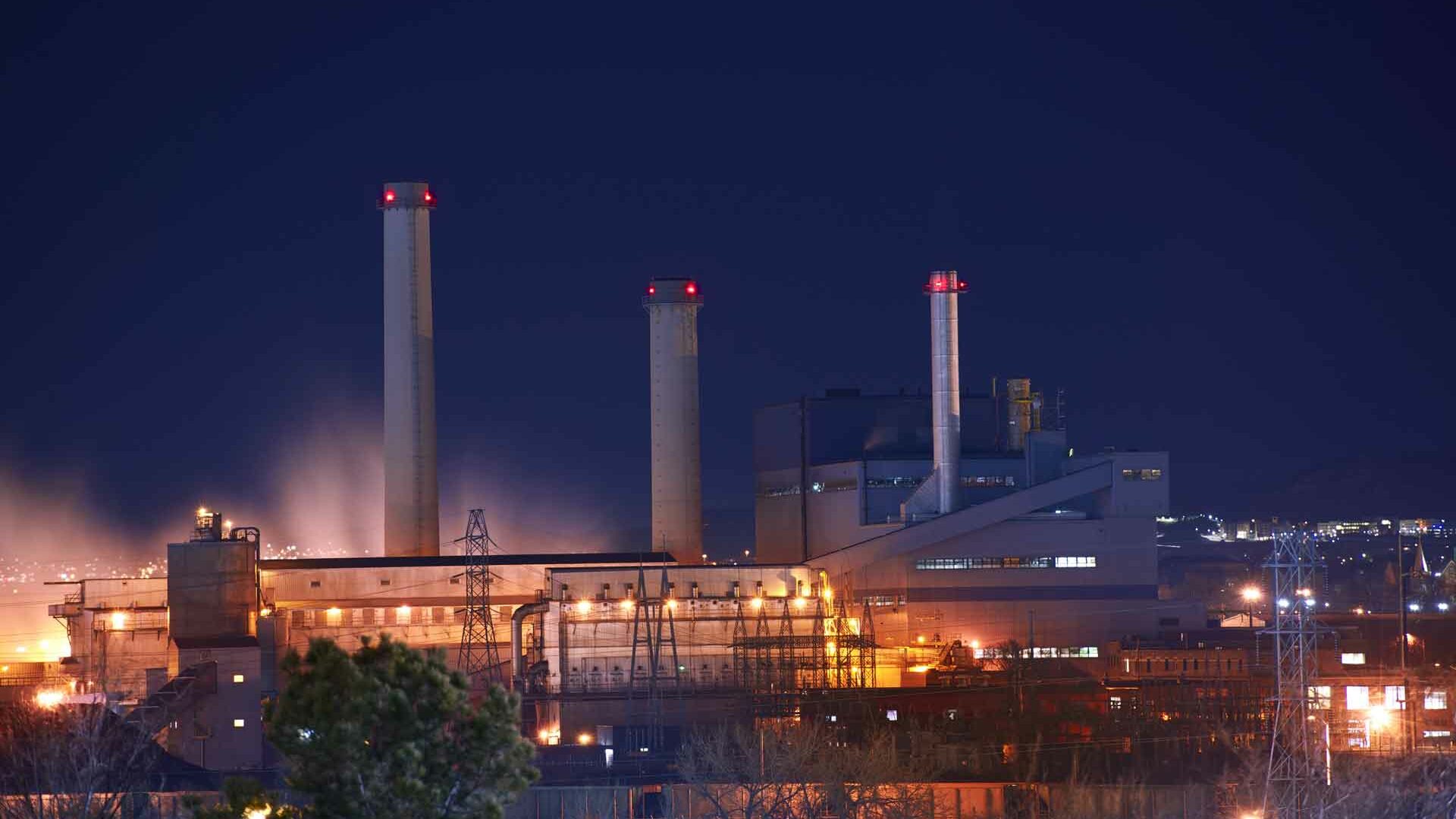
The ceremony marks a significant transition from regulatory approvals to structured commercial execution, enabling flare gas volumes across OML 17 to be captured and deployed for productive use, including power generation, industrial applications, LPG and CNG, in alignment with Nigeria’s gas development priorities and energy-transition objectives.
The agreements bring together Heirs Energies, as operator of the OML 17 Joint Venture, and approved flare gas offtakers – AUT Gas, Twems Energies, Gas & Power Infrastructure Development Limited (GPID), PCCD and Africa Gas & Transport Company Limited (AGTC) – under frameworks designed to eliminate routine flaring while converting previously wasted resources into economic value.
Speaking at the ceremony, the Chief Upstream Investment Officer of NUIMS, Engr. Seyi Omotowa, representing NNPC Limited, described the milestone as a practical demonstration of Nigeria’s commitment to gas-based development.
“For us at NNPC Limited and NUIMS, flare gas commercialisation is not a compliance exercise; it is a strategic pathway to improving energy availability, deepening gas-based industrialisation and strengthening Nigeria’s position as a responsible energy producer. OML 17 has become a practical model of this vision, moving decisively from approval to delivery.”
He commended Heirs Energies for disciplined execution and investment, noting that the JV continues to set benchmarks for operational delivery and gas development within Nigeria’s upstream sector.
The Nigerian Upstream Petroleum Regulatory Commission (NUPRC), represented at the event on behalf of the Commission Chief Executive, Engr. Gbenga Komolafe, FNSE, reaffirmed the Commission’s support for the project, describing flare gas commercialisation as a cornerstone of Nigeria’s decarbonisation pathway under the Petroleum Industry Act (PIA) 2021.
“This ceremony demonstrates Heirs Energies’ commitment to eliminating routine gas flaring across OML 17 and aligns fully with the Commission’s Gas Flare Commercialisation Programme and national energy and emission-reduction objectives,” the NUPRC representative said.
Heirs Energies’ Chief Executive Officer, Osa Igiehon, noted that the agreements reflect the company’s broader gas-led strategy and brownfield excellence approach, focused on creating long-term value for Nigeria.
“Gas sits at the heart of Nigeria’s development journey. Through disciplined investment, partnership with regulators and credible offtakers, and a clear execution focus, we are converting waste into value, strengthening domestic energy supply and supporting responsible operations across OML 17,” he said.
The NGFCP and Non-NGFCP flare gas projects build on recent operational progress by the OML 17 Joint Venture, including a significant increase in gas delivery to the domestic market through brownfield interventions and infrastructure optimisation. The JV has also continued to deepen its host-community partnerships through targeted healthcare interventions, education support and skills-development programmes across its areas of operation.
With the symbolic signing completed, the flare gas offtakers are expected to progress into full project implementation, working closely with the JV, regulators and communities to deliver commercial, environmental and social outcomes.
The OML 17 NGFCP initiative reinforces Nigeria’s position as a gas-led economy, supporting domestic power generation, industrial growth and responsible resource development while advancing the country’s energy-transition objectives.
WAPCo Seeks Pipeline Protection To Ensure Sustainable Gas Delivery From Nigeria To W/A Countries
The West African Gas Pipeline Company (WAPCo) has called for pipelines protection to ensure sustainable gas delivery to customers in Togo, Benin Republic and Ghana.
The Company said this has become expedient given the critical need to ensure energy security in West Africa sub-region.
Despite delivering the highest volume in its 30-year history by the Company, the region’s cross-border gas network still operates at less than half of its 470 million standard cubic feet per day (mmscf/d) capacity.
The development indicates the level of energy deficit in the region and reliance on Nigeria’s gas to sustain electricity supply from Lagos to Lomé and Accra.
The Managing Director of WAPCo, Abiodun Abodunrin, speaking in Lagos, said the bi-directional pipeline, which now allows gas flows from both Nigeria and Ghana, is the backbone of electricity generation in Benin, Togo and Ghana.
He added that any disruption to operations could trigger immediate power shortages across the three countries, highlighting the fragility of regional energy security.
As of November 2025, the company delivered an average of 217 mmscf/d, and it expects to close the year at 218 to 220 mmscf/d, the highest throughput since operations began.
With more than 250 mmscf/d of unused capacity daily, WAPCo noted that West Africa continues to experience avoidable electricity shortages.
“On our best days, we are only utilising around 40 per cent of the pipeline’s capacity; meanwhile, populations across the region are growing faster than the energy available to them.”
Abodunrin highlighted the need for a harmonised fiscal and regulatory framework across the four countries to attract private investment for growth.
He revealed that Benin has passed its amendment to the fiscal and regulatory framework, while Nigeria has submitted an executive bill to the National Assembly. Togo and Ghana are still in the parliamentary stages.
“This framework underpins regional gas trade. Without clarity on regulations and fiscal terms, investors will not commit to expansion, and West Africa’s energy growth will remain constrained,” he said.
While Nigeria remains the dominant supplier, Abodurin noted that the company has increasingly become bi-directional, allowing gas from Ghana’s Takoradi fields to flow into the network.
“We now have the flexibility to take gas from anywhere in the region and deliver to anywhere in the region.
That’s something that has happened. So, we will see that our initial display, right, we want to be an international company that transports natural gas across these four countries in a safe, responsible, and reliable manner to create value for our diverse stakeholders. That includes our shareholders and stakeholders in the four countries where we operate. And I’m sure you all know that energy is fundamental to life,” he said.
He stressed that it’s not growth for the sake of growth, as it must deliver value to shareholders and ensure reliable energy to the region. He explained that maximising pipeline use will be critical to meeting West Africa’s expanding energy needs.
WAPCo also warned against the risks posed by illegal sand mining along Nigeria’s pipeline right-of-way, as these high-pressure gas lines are far more vulnerable than oil pipelines and that a rupture could have catastrophic consequences.
The January 2025 offshore pipeline inspection, involving full cleaning and diagnostics across four countries, was completed on time and within budget. Preliminary results confirmed that the line remains in good condition, despite some sections approaching 30 years of service.
He said safety remains the company’s top priority as the Company reported over 13 million man-hours and 11 years without a lost-time incident, and this year alone, achieved nearly one million man-hours without any safety accidents.
WAPCo has set targets to surpass 2025 volumes in 2026 and to commence positioning the pipeline toward full utilisation of its 470 mmscf/d capacity with potential expansion to accommodate growing gas availability in Nigeria and Ghana and rising electricity demand across the region.
Doowe – Powering Innovation. Energizing Africa.
 DooweGas is on a mission to ignite the future of energy, and we want YOU to be a part of it! Our YouTube channel is the place for in-depth analysis, expert interviews, and the latest breakthroughs for professionals, investors, and policymakers in the energy sector.
Why Subscribe NOW?
Exclusive Content: Get cutting-edge insights you won’t find anywhere else.
Expert Analysis: Understand the “why” and “how” behind the biggest energy stories.
Community: Join a growing network of passionate energy professionals.
Be a Pioneer: Help us build the ultimate resource for African energy intelligence!
 Discover innovative LPG solutions
Learn how we’re powering homes & businesses sustainably
Connect directly with our team
 Don’t miss this chance to experience the future of energy with Doowe Gas!
 Limited-Time Exclusive Offer for Our Next 900 Subscribers!
To celebrate our journey to 1000, the next 900 people who subscribe to our channel will receive an exclusive, in-depth access to our research from DooweGas on “The Future of LPG in West Africa: Opportunities & Challenges,” absolutely FREE! This is invaluable for anyone in the energy space.
Join The DooweGas Mentorship Access
With the just-concluded COP30 — the global climate conference where world leaders, financial institutions, and policymakers set new directions for sustainability, carbon markets, and future business regulations — it has become important for individuals and organisations to understand what these decisions mean and how they will affect opportunities going forward.
Engr. Dr James Atiti will be sharing the full insights, recordings, and key materials inside the Doowe Mentorship Platform for anyone who wants to stay ahead and position themselves for the new wave of ESG and climate-related opportunities.
If you’re interested in accessing this information, kindly signify to be added. The annual subscription is ₦50,000.
This knowledge matters because COP30 decisions will influence:
New ESG and sustainability requirements
Access to funding, grants, and climate finance
Business compliance and competitive advantage
You Will Also Get:
Business insights from seasoned operators
Live Monthly Sessions: With industry leaders and DooweGas experts
Sales Strategies: Learn how to scale bulk sales, B2B, and cylinder tracking
Business Support: Ask questions, get feedback, and learn from real gaspreneurs
Group Referrals: Connect with reliable vendors, customers, and suppliers
Private Group Access: 24/7 interaction and guidance from mentors and alumni
How To Join And Take Advantage Of This Opportunity
Chat up this WhatsApp number : +353 89 951 6491 to join and be a part of this energy journey.
Join the conversation. Get informed. Get empowered. Subscribe today!
 Click here to subscribe and claim your FREE access: https://www.youtube.com/@doowegas/
Source: https://orientalnewsng.com/
 New Podcast Release!
Decarbonizing the Seas: LPG & LNG as Clean Maritime Fuels | Doowe Podcast ft. Temisan Omatseye
If you’re passionate about the future of sustainable maritime transport, this is a conversation you don’t want to miss. In our latest Doowe Podcast episode, maritime expert Temisan Omatseye breaks down how LPG and LNG are shaping the next era of cleaner, safer, and more efficient global shipping.
 From cutting-edge fuel technology to long-term decarbonization strategies, this episode is packed with insights for industry leaders, innovators, policymakers, and anyone curious about the future of the blue economy.
Watch now on YouTube:
Dive in, learn something new, and join the movement toward a cleaner maritime future. Let’s decarbonize the seas—together.