

With Brent prices swinging from $119 to $86 in a matter of days, the Strait of Hormuz closed and war‑risk insurance soaring, Africa faces a classic external‑price and logistics shock. Oil exporters may see fiscal windfalls, but most African countries are net importers of refined fuels and food. The near‑term impulse is therefore inflationary, FX‑draining and confidence‑sapping – especially in fragile Sahelian economies.
Since late February, attacks and threats around Hormuz have led carriers and insurers to suspend or sharply reprice Gulf transits. War-risk premia reportedly jumped tenfold in some lanes, freight spiked and vessels have been idled or rerouted via the Cape of Good Hope, adding 10–15 days to Asia-Europe rotations. This has squeezed energy and reefer capacity, pushing rates and insurance higher.
Hormuz carries about a fifth of global oil and significant LNG flows. Even partial closures create energy and fertilizer ripple effects. Multiple outlets reported Brent surging past $100 and briefly near $120. South Africa’s press is already flagging Consumer Price Index (CPI) and interest-rate risks. For Africa, where most countries import petroleum products, the vulnerability is obvious: when crude spikes and currencies wobble, pump prices and logistics costs rise quickly.
Implications for Regional Countries
The regional implications are uneven. Exporters such as Nigeria, Angola, Congo and Gabon may gain from higher oil prices if volumes hold, but import inflation and tighter global risk conditions can claw back those gains. Importers such as Kenya, Tanzania, Ghana, Senegal and Rwanda face higher fuel and freight costs, wider current account deficits and growing pressure on FX reserves. In the Sahel – especially Burkina Faso, Niger and Mali – limited fiscal space, insecurity and higher food and fuel prices can quickly translate into humanitarian and macro stress.
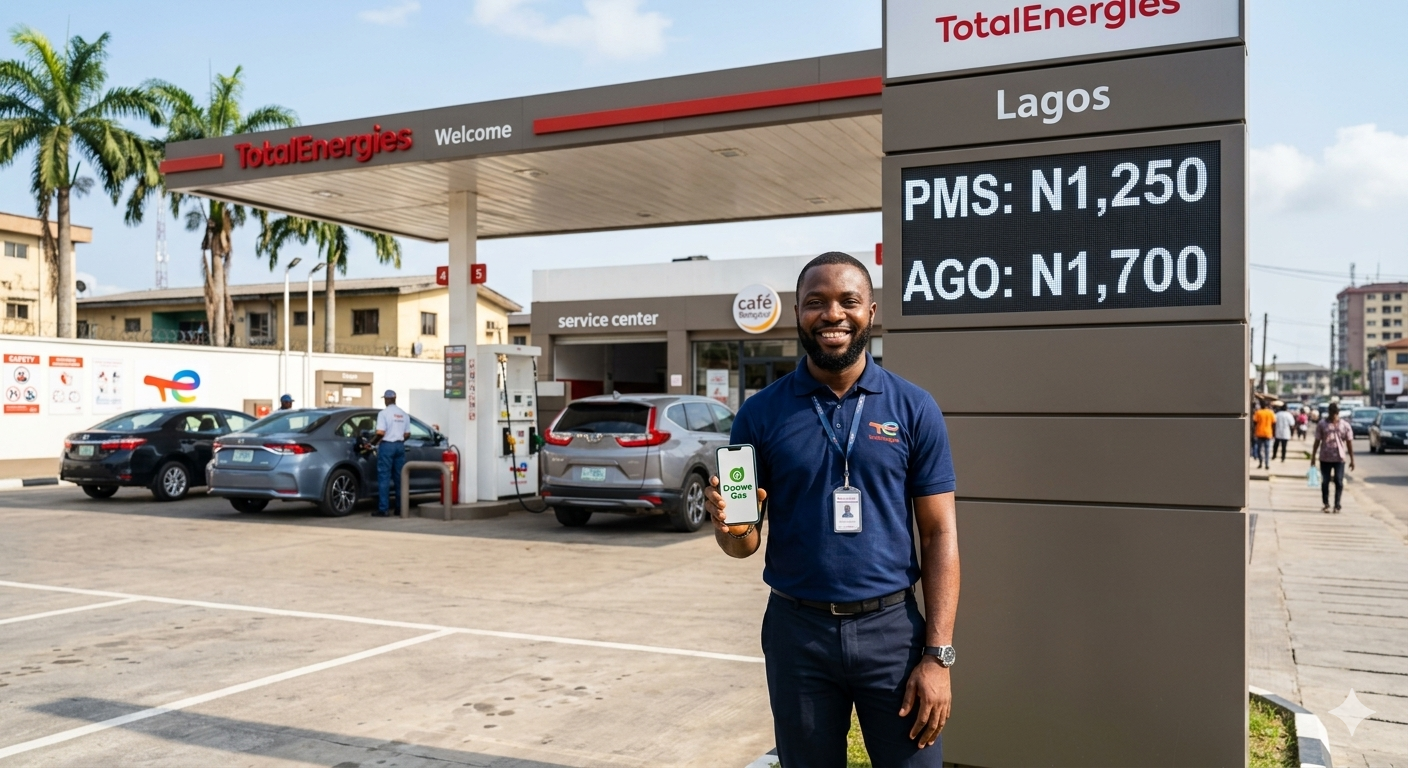
Nigeria captures the contradiction clearly. It is Africa’s largest oil producer, yet still import-dependent. Market reports point to petrol loading pauses at Dangote’s refinery, followed by ex-gantry price resets as crude costs and FX-linked feedstock rose. Retail prices reportedly breached ₦1,000/l in multiple states. Nigeria’s 2026 budget uses a conservative $60–65 oil benchmark, so higher prices improve revenue on paper. But imported inflation and FX pass-through can offset those gains. Angola faces a similar tension: higher export receipts on one side, higher import and inflation pressures on the other. South Africa is more exposed still. As a net importer, its regulated fuel price tracks Brent and the rand, meaning the shock threatens to delay rate cuts and lift CPI through transport and food.
Petroleum, Food and Fertilizers: Where the Pinch Hits
The pinch points go beyond oil. Mounting war-risk surcharges and longer voyages are tightening diesel and gasoline availability and raising replacement costs. Fuel is both a first-round CPI component and a second-round input for transport, cooking, milling and cold chains. Africa can therefore expect inflation re-acceleration in fuel-importing emerging markets. Fertilizer and freight shocks also tend to show up later in staple prices. The 2022 experience showed how combined energy and shipping costs can elevate CPI for months, and the current disruption points to a similar pathway. The International Monetary Fund (IMF) had projected easing global inflation in its January 2026 World Economic Outlook update. The Iran shock now adds downside growth and upside inflation risks for Africa.
The Gulf is also a major urea exporter. Rising oil and gas prices, together with shipping detours, are lifting fertilizer costs and threatening planting seasons across net-importing African economies. Reefer scarcity and delays increase the risk of perishable spoilage and higher food import prices. For low-income and import-dependent countries, that is where the shock becomes most dangerous.
The Road Ahead
Three scenarios now stand out. Under prolonged disruption, Brent averages $100–120, war-risk premia remain high and Cape diversions persist. That would mean higher fuel CPI, wider current account gaps, tighter credit conditions and acute food insecurity in fragile states. Under partial normalization, Brent settles at $85–100 and schedules stabilize, though with longer transit times and surcharges. That would still be inflationary, but manageable with targeted fiscal measures and liquidity support. Under rapid de-escalation, Brent falls back toward $70–80 and inflation pressure eases, but confidence damage remains.
What should Africa do now? Ministries of finance and central banks need to re-baseline budgets, run sensitivity tables at $90, $110 and $120 Brent, adjust fuel-tax and subsidy lines and update FX reserve assumptions. Trade-finance guarantee windows should be expanded, while targeted transfers should be used instead of broad fuel subsidies. Energy and logistics agencies should formalize crude-to-refinery arrangements where relevant, pre-arrange war-risk cover and alternative routes and use stock draws or product swaps where possible. Agribusiness and food-importing SOEs should lock in urea and wheat through staggered purchases, diversify ports and book reefer capacity earlier. Banks and corporates should reprice trade terms, review covenants and strengthen working capital structures for longer transit and inventory cycles.
The Sahel deserves special attention. Security constraints, aid shortfalls and import price spikes together create a high risk of food insecurity and social instability. Donor coordination on food and fuel vouchers, fertilizer support and corridor security could avert a deeper crisis. At the same time, accelerated mini-grid and solar cold-chain investment can reduce import dependence over time.
Africa cannot assume that a temporary oil spike is just a market event. This is a broader logistics, inflation and resilience shock. Exporters may enjoy a windfall, but importers will feel the pain first and fragile states will feel it hardest. The countries that move fastest – on budgets, supply security and targeted support – will be the ones best positioned to manage the fallout.
Petrol, diesel vessels arrive Nigeria amid price surge
- Why imported petrol still enters Nigeria — NMDPR
As Nigerians contend with rising petrol prices, vessels carrying 129,000 metric tonnes of Premium Motor Spirit (petrol) and Automotive Gas Oil (diesel) are expected to dock at Lagos Ports between March 14 and 17, 2026.
This came as officials of the Nigerian Midstream and Downstream Petroleum Regulatory Authority explained why some importers were still importing PMS despite the agency’s position that no petrol import licence had been issued this year.
According to the Nigerian Ports Authority’s Shipping Position Daily obtained on Monday, a vessel, Mosunmola, carrying 20,000MT of PMS, arrived at Lagos Ports via the Bulk Oil Plant on Sunday, March 14, 2026. Another vessel, Kobe, with 22,000MT of AGO, docked at Kirikiri Lighter Terminal Phase 2, Tin Can Island Port, on the same day.
On Tuesday, March 17, Bora is scheduled to arrive at Kirikiri Lighter Terminal 3B with 27,000MT of PMS, while Ashabi will bring 30,000MT of AGO to the same terminal.
Additionally, Oluwajuwonlo offloaded 15,000MT of PMS at Calabar Ports through Ecomarine Nigeria Limited on Sunday, March 15. Mosunmola will also deliver 15,000MT of PMS to Calabar Ports via a North West Petroleum Gas Co Limited terminal on March 17.
The vessel arrivals coincide with ongoing fuel price hikes nationwide. Nigerians currently face surging petrol costs after Dangote Petroleum Refinery raised its gantry price for PMS to N1,175 per litre, pushing retail prices above N1,200 per litre. The increase has affected transport fares and driven up the cost of goods and services nationwide.
Economic analysts, labour unions, and private sector leaders have called on the Federal Government to provide relief measures, citing rising crude oil prices driven by escalating tensions between the United States and Iran. Some stakeholders suggested subsidising petrol to mitigate the impact on citizens and businesses, warning that continued price increases could exacerbate inflation.
Petrol prices have reached between N1,200 and N1,300 per litre in several areas, with projections suggesting costs could exceed N1,500 or approach N2,000 per litre if the Middle East crisis persists.
Marketers speak
The Independent Petroleum Marketers Association of Nigeria confirmed that independent marketers are prepared to lift imported products to ensure availability and competition.
IPMAN spokesperson Chinedu Ukadike said, “We, the independent marketers, are always on the receiving side. Wherever the product is coming from, and it is in the tanks of depot owners or NNPC, we will buy it. The most important thing is availability.
“If NMDPRA made a statement categorically that there is no import licence, I don’t know where this one is coming from. But we are ready to receive the products and sell. Maybe that will also breed competition, and this price volatility may have sustainability. So, I think it is also a welcome development.”
Ukadike added that the vessels might be operating under licences issued long ago and that delays at sea—particularly around the Strait of Hormuz—may explain their late arrival.
“It might also be an old importation licence issued since last year. It is acceptable. The imported products would not have any impact on prices unless the price of crude oil declines. The price depends on the volume and cost of the product because there is nothing like a reduction in prices when Brent is still selling for over $100,” he said.
NMDPRA explains imports
The Nigerian Midstream and Downstream Petroleum Regulatory Authority has clarified that no import licences were issued in the first quarter of 2026, asserting that shortfalls in February were covered by leftover stocks from January and existing refinery output.
While IPMAN and other stakeholders supported the halt on fuel import licences, major dealers and importers argued that imports were still necessary to meet national demand. February figures show Dangote refinery produced an average of 36 million litres per day, while national consumption was about 56 million litres per day, leaving an apparent gap.
A source within NMDPRA, speaking on condition of anonymity due to the lack of authorisation to speak on the matter, explained that the refinery’s unsold stocks were rolled over due to weather-related export delays in Europe at the end of 2025, closing the supply gap in February.
“The shortfall rolled over from previous stocks. These things are simple. Our fact sheets are published monthly. There were rollover stocks. Dangote didn’t export for a long time towards the end of last year. So, it was those rolled-over stocks that it supplied. Both marketers and Dangote are only jostling for market shares. Has there been a shortage? No!” the source said.
The regulator also refuted online claims that new licences had been issued, noting that licences are granted quarterly. “Those that were issued towards the end of last year were still being used. A licence for importation is not like taking money to the supermarket. It takes time for vessels to arrive. We have not issued any import licence this year,” the official said.
Nigeria has historically relied on imported refined petroleum products due to limited domestic refining capacity. However, the operational Dangote refinery, producing 650,000 barrels per day, has shifted the downstream dynamics. NMDPRA confirmed that domestic refineries supplied 36.5 million litres per day in February 2026, with imports contributing just three million litres, representing roughly 92 per cent of the national daily supply.
Chief Executive of NMDPRA, Saidu Mohammed, warned against returning to heavy import dependence. “We have not issued a single licence for petrol importation this year. Some interests still push for large-scale importation despite our progress in domestic refining,” he said during a meeting with a PUNCH delegation at the agency’s Abuja headquarters.
The recent vessel arrivals, while ensuring availability, largely reflect past import licences and logistical delays, rather than new authorisations from NMDPRA.
Oil and gas prices fall after Trump says war is ‘very complete’
This Thursday, March 19th, 2026, we are hosting a masterclass that will change your business perspective and your financial life.. We are hosting Mr. Bukola Moradeyo, the CFO of Lasaco Assurance.
With 30 years of finance experience, Mr. Moradeyo will teach you how to validate a business idea with ZERO capital.
-
How to think like a corporate finance veteran.
-
Identifying “Zero-Cost” entry points in the gas market.
-
Financial discipline for early-stage startups.
Exclusive to Premium Members. Upgrade now so you don’t miss the session!
The Doowe Business Premium WhatsApp Group is where we pull back the curtain. While the general public is panicking over price hikes, our members are learning how to hedge their risks and secure their supply chains.
Why are you still on the sidelines?
-
B2B Sales Mastery: Learn how to secure industrial contracts.
-
Insider Alerts: Get maintenance and global policy updates before they hit the headlines.
-
Verified Network: Connect with the most reliable vendors in the LPG/CNG space.
The window to join the elite is closing. Don’t just watch the news. Profit from it.
👉 Join the DooweGas Premium Mentorship Group & Claim Your Future!
https://punchng.com/petrol-diesel-vessels-arrive-nigeria-amid-price-surge/