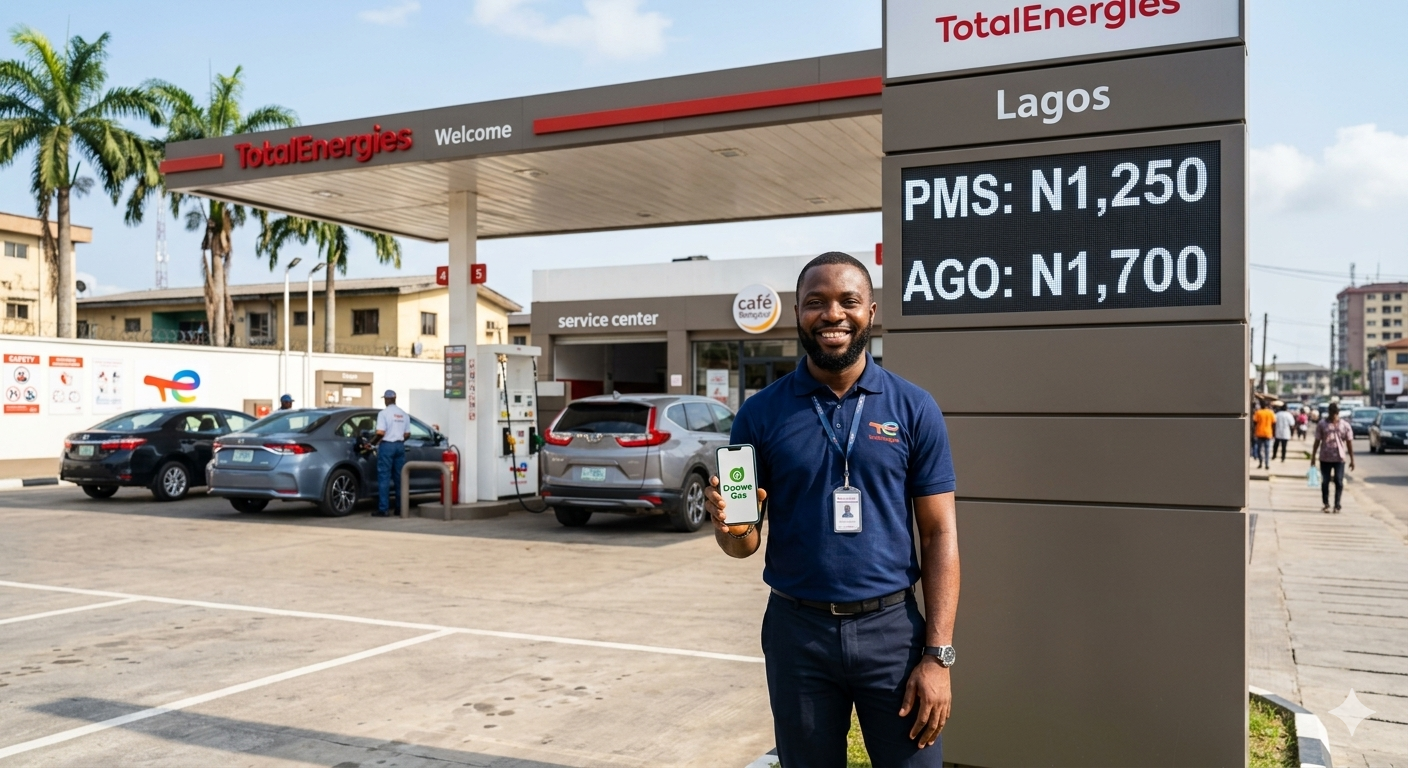


A new gas regime is going to take place in Nigeria after the Nigerian Midstream and Downstream Petroleum Regulatory Authority, announced increase in the price of natural gas for power generation companies to $2.18 per million British thermal units (BTU).
The NMDPRA disclosed this in a public announcement signed by the Authority’s Chief Executive, Saidu Mohammed, on Tuesday in Abuja.
The new pricing, effective from April 1, 2026, signals a recalibration of Nigeria’s gas market at a time when the power sector is already struggling with supply shortages, mounting debts, and liquidity challenges.
The new price is slightly higher than the 2025 rate of $2.13 per MMBtu for power generation companies, representing a marginal increase of five cents, or about 2.35 per cent.
This comes as the Federal Government paid N71.49bn out of the N1.92tn electricity subsidy owed to power generation companies in 2025, representing just 3.7 per cent of the total sum.
With the new marginal increase in gas prices, subsidy costs are set to rise further, compounding the financial woes of power generation companies unless there is a policy shift.
The adjustment also raises concerns that gas-linked subsidies and obligations across the electricity value chain could widen, given the sector’s heavy reliance on gas-fired generation. Nigeria generates over 75 per cent of its electricity from gas, making pricing decisions directly consequential for power costs and government subsidy exposure.
In the announcement, the regulator said the new price was determined in line with the Petroleum Industry Act, market realities, and existing gas pricing regulations.
“Taking into cognisance the provisions of the PIA, market realities, as well as the gazetted Gas Pricing and Domestic Demand Regulations, the NMDPRA hereby establishes the new Domestic Base Price as $2.18/MMBtu and wholesale prices of natural gas in the strategic sector, effective 1st April 2026,” the statement read.
Under the new regime, gas supplied to the power sector will be priced at $2.18 per MMBtu, serving as the benchmark Domestic Base Price. The regulator did not specify a separate floor or ceiling band for this category, effectively pegging supply to the base rate.
For commercial users, the authority fixed the wholesale price at $2.68 per MMBtu, while gas-based industries—including ammonia, urea, methanol, polypropylene, and low sulphur diesel producers—will operate under a more flexible pricing structure.
The regulator set a floor price of $0.9 per MMBtu, with the final price determined using a formula in the Fourth Schedule of the Petroleum Industry Act, benchmarked against the Domestic Base Price of $2.18/MMBtu.
The authority said the pricing structure is aimed at ensuring competitiveness across sectors while guaranteeing adequate supply to the domestic market.
“We thank and appreciate all investors in the Domestic Gas Market Sector and assure you of the Authority’s commitment to ensuring transparency, deepening of the domestic gas market, and creating an investor-friendly business environment, as we dutifully implement all the provisions of the regulatory framework,” the regulator added.
However, the development comes at a delicate time for the power sector, where stakeholders warn that pricing reforms could worsen liquidity pressures if not matched with improved payment discipline and supply stability.
The review is expected to indirectly increase subsidy obligations within the electricity market, where tariffs remain below cost-reflective levels for several consumer bands. The regulator said the framework is anchored on ensuring sufficient domestic supply while maintaining investor confidence.
“The price must be at a level to bring forward sufficient natural gas supplies for the domestic market voluntarily by upstream producers,” the announcement stated.
The development also aligns with recent concerns raised by the Minister of Power, Adebayo Adelabu, who warned that Nigeria’s gas supply crisis is worsening due to pricing distortions and payment challenges.
He explained that gas suppliers often prioritise export markets due to better returns compared to domestic power plants and highlighted ongoing liquidity constraints.
Adelabu added, “There is a lot of pressure on gas exports from Nigeria…Today, the power plants are paying the lowest price for local supplies. These gas companies have the option of selling it as exports at more than double what local plants are paying.
“Beyond that, when they supply to the power plants, they are not getting paid. They are only getting a proportion of what the sector pays, which today is about 35 per cent to 40 per cent. This is even outside the legacy debt of N4 trillion. Out of about 32 power plants that we have today, only two have firm gas supply contracts. Others operate on a best endeavour basis, after satisfying export and industrial customers.”
Nigeria’s gas-to-power framework remains central to its electricity strategy but is constrained by supply shortages, infrastructure gaps, and pricing disputes. Despite holding one of Africa’s largest gas reserves, domestic utilisation lags due to weak investment signals and export-driven incentives.
The Petroleum Industry Act introduced a market-based pricing system intended to correct distortions and attract investment, but implementation has remained complex due to competing economic pressures. Recent pipeline constraints and maintenance issues have further tightened supply to power plants.
The latest price adjustment by the NMDPRA underscores ongoing efforts to balance fiscal realities, investor expectations, and energy security. However, with subsidy exposure unresolved and gas supply shortages persisting, stakeholders warn that Nigeria may face another phase of cost pressures that could deepen fiscal risks if structural reforms do not keep pace with pricing reforms.
Conflict in West Asia drives demand for African oil
The US-Israel war on Iran and the ensuing difficulty of moving oil tankers through the Strait of Hormuz have severely disrupted global oil and liquefied natural gas (LNG) supplies. Crude oil price has surged past the US$100 per barrel mark. This has handed the leading crude oil producers of Africa a windfall. But except for Angola, few others will be able to ramp up production quickly. Among the biggest winners are Nigeria, Algeria, and Angola.
Algeria has entered frantic negotiations with European buyers to boost gas flows and is considering selling additional volumes via the spot market at higher prices. State-owned oil monopoly Sonatrach says it is ready to redirect supplies through the two gas pipelines (TransMed and MedGaz) connecting North Africa to Europe. Bu these pipelines are already near full capacity. What Algeria is appears to be doing is using the crisis to secure higher prices and renegotiate terms rather than expand output. Libya is trying to ramp up its oil production to 2 million barrels per day and its National Oil Corporation (NOC) has signed a number of new oil exploration and re-development contracts with international oil majors. Egypt has raised domestic fuel prices to manage the fiscal shock from higher global oil prices and is ramping up offshore gas drilling activity. Angola has begun producing 150 million cubic feet of gas per day from the Quiluma project and plans to ramp up production to 330 million cubic feet per day by the end of this year. It is one of the few African producers adding new volume onto the market right now.
Nigeria has reduced the approval time for reviving idle oil wells from several weeks to mere hours, a rapid pivot by Africa’s top crude producer to take advantage of surging energy prices triggered by the Iran war. By expediting paperwork that previously consumed up to six weeks, the Nigerian Upstream Petroleum Regulatory Commission hopes to fast-track production. Repairing suspended wells offers a cheaper and significantly faster alternative to drilling new ones, which often requires years of planning. But Nigeria pumped just 1.31m bpd in February – its lowest volume in 17 months thanks to maintenance work being carried out at a 225000 barrels per day site operated by Shell.
Oil and gas importing nations around the world are actively seeking to secure African energy supplies. Yet most African producers are unable to fully capitalise. Nigeria, Angola, Libya, and Algeria sit on more than 100bn barrels of proven reserves, yet each of these nations is now exporting between 500000 and 1m fewer barrels per day (bpd) than at their peak. A combination of underinvestment, insecurity and retreat by Western oil majors has meant that most African countries have little or no spare capacity to take advantage of a windfall as presented by this recent crisis.
Then there are losers as well. Net oil importers such as South Africa, Kenya and the Democratic Republic of Congo will be among the hardest hit. The conflict in West Asia is also expected to spark inflation across the continent as the debt distressed governments struggle to find the foreign exchange to buy fuel, food and fertilisers – much of which is still imported.
The disruption to oil supplies from the Gulf region is also prompting a shift in regional fuel procurement. Several African governments have approached the Lagos-based Dangote Petroleum Refinery and Petrochemicals to secure refined products. South Africa is now exploring a diversified range of sources and has reportedly inquired about a 12-month supply contract with the Dangote facility. Ghana and Kenya have expressed similar interest, while Tanzania this month (Mar) received its first Dangote shipment.
Owned by Aliko Dangote, Africa’s richest man, the 650000 barrels per day refinery reserves roughly 75% of its output for Nigeria, leaving the remainder for export. To account for rapidly rising global oil costs, the facility has raised fuel supply prices for domestic consumers multiple times in March.
Some 20% of the global oil and gas moves through the Strait of Hormuz. Iran has restricted movement through the Strait and oil tankers are avoiding passing through the war zone. A complete closure of the Strait would result in the removal of almost 20 million barrels of oil per day from the market triggering an oil crisis not seen since the 1970s
The CNG Reality Check: Why Nigeria’s Gas Transition is Facing Growing Pains
Nigeria advances regional gas strategy with infrastructure push
Country outlines plans to expand gas supply and strengthen West Africa’s energy integration by 2030
Nigeria is advancing efforts to build a regional gas ecosystem in West Africa, targeting daily supply of 12 billion cubic feet by 2030, according to the government initiative “Decade of Gas Secretariat”. The strategy forms part of the national “Gas for Nigeria’s Prosperity” agenda, aimed at leveraging natural resources to support long-term economic development.
The creation of the “Decade of Gas Secretariat” in 2023 has allowed implementation to be streamlined, focusing on areas such as infrastructure expansion, competitive pricing and capacity development.
Accordint to the source 16 priority gas infrastructure projects had been identified, requiring an estimated US$22 billion in investment. The projects are designed to strengthen connectivity between production centres and end users, supporting both domestic consumption and cross-border distribution.
Nigeria’s gas output increased from 6.8 billion cubic feet per day in 2023 to 7.5 billion cubic feet per day in 2025, reflecting coordinated engagement among public institutions, regulators and investors. More than 215 demand-driven initiatives are currently being monitored through a centralised system.
Key areas of focus include gas-to-power development and the expansion of Liquefied Petroleum Gas (LPG) usage, aimed at enhancing electricity supply and supporting wider adoption of cleaner energy solutions. Nigeria plans to raise annual LPG consumption from 1.8 million tonnes to 3 million tonnes by 2030, supported by large-scale distribution of gas cylinders.
Join Our Pro Mentorship Program?
If you haven’t yet joined the Doowe Gas Pro Mentorship Program, this is a great time to come on board and also share this opportunity with friends and colleagues who may benefit from it.
Our last session with the CFO of Lasaco Insurance Company was truly mind-blowing—packed with real industry insights, financial wisdom, and practical strategies you won’t easily find elsewhere.
We have another session coming up on the 17th of April with the Co-founder of clowza.com. He has founded several businesses and sits on the board of several corporation. On this upcoming edition, he will be teaching us on cashflow and how to handle money for multiplication. You can’t afford to miss this life-changing event.
Why you must attend:
-
Learn how to keep your gas business profitable during inflation.
-
The secret to moving from “earning” to “multiplying.”
-
Exclusive B2B funding insights you won’t find on Google.
Being part of this WhatsApp group gives you direct access to top industry leaders, exclusive mentorship sessions, insider knowledge on the LPG and energy business, networking opportunities, and continuous personal and professional growth—all for just ₦50,000 annually.
Don’t miss out on the chance to position yourself ahead in the industry.
👉 Upgrade to Premium Now to Attend
https://orientalnewsng.com/conflict-in-west-asia-drives-demand-for-african-oil/
https://orientalnewsng.com/new-gas-price-to-take-effective-in-nigeria/